It is a question that scholars, historians, and the general public have always been fascinated with: why have we become so politically divided here in the United States? Some Americans feel like there is something unique about the political hostility that we see today. But in reality, this is not a new development. Political division has been a common trend throughout history, not only in the United States, but in essentially every country in the world. While patriotic and nationalistic sentiments can occasionally hold a nation together (for good or for evil), political, economic, and social divisions always seem to win out. Why is that? To understand the answer to this question, we have to look back at our country’s history, beginning with its founding.
The United States of America got off to a bit of a shaky start. Once the feelings of patriotism and pride of the American Revolution cooled off, America went right into a state of political division. There were raging arguments about how much power the federal government should have in comparison to the state governments, and whether or not the new national Constitution should be ratified. After seeing the political divisions unraveling before him, President George Washington immediately feared that the country was going down the wrong path when he witnessed the rising political factions in the federal government. Even though he warned his country of the dangers of rival political parties in his Farewell Address, the United States essentially ignored Washington’s advice, continuing down a path of political parties and factions.
Now, why does this history matter? What significance does it hold? Well, some people have this false idea of what truly characterized the early American republic. They think of the founding era as a sort of golden age, where Americans were unified and didn’t get caught up in bitter disagreements and hateful division. But the truth is that America was extremely divided from the beginning. The leading figures in the federal government, including Alexander Hamilton, Thomas Jefferson, John Adams, and more, had completely different visions of what the country should be. I could go on and on about what exactly those visions looked like. But the point is that America, since its founding in the late 18th century, was off to a rough start, as political factions seemed to dominate the U.S. government, as well as American society as a whole.
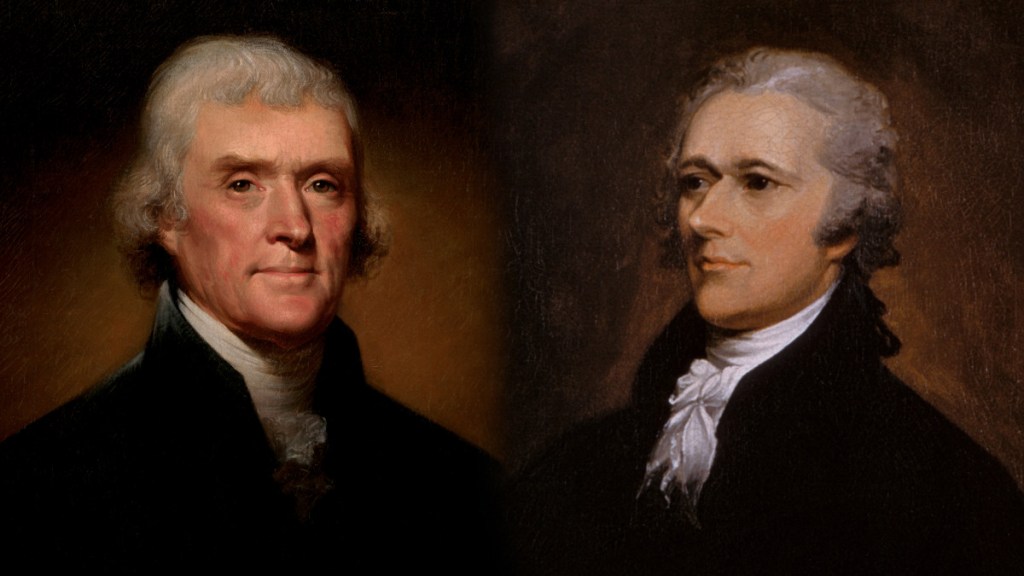
This political division would not be solved anytime soon. And to be frank, it never has been solved. Some of the more pessimistic Americans would claim that the vicious nature of our political disunity is inevitable and unsolvable. Yes, there have been times where we seem to look past our differences and unite as a country. This is particularly the case when we have a common enemy, such as Nazi Germany and Imperial Japan in World War II, or the Soviet Union in the Cold War. But these times seem to be not only uncommon, but also short-lived. Think of the founding of the United States as an illness at birth: that illness never truly goes away, nor is it something that you can easily just “look past.” This analogy summarizes the unstable founding of the United States, as well as its ramifications that we continually see today.
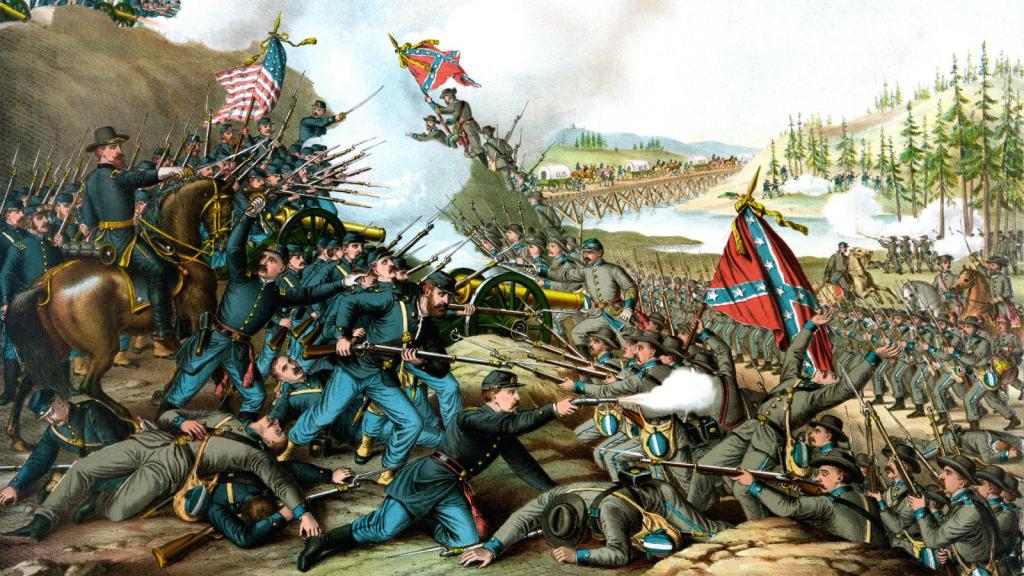
The American Civil War in the mid-19th century was the bloody culmination of the United States’ division, specifically over the issue of slavery and whether or not the southern states had the right to enslave and own African-Americans. However, the United States always seems to be in the midst of a “civil war.” Perhaps this war does not involve guns, cannons, and almost one million dead Americans like the actual Civil War. But if you look at the history and current state of our union, you can always count on at least a few issues tearing us apart: the power of the federal government, the right to own slaves, the civil rights of African-Americans, voting rights, economic justice, the issue of abortion, gun control, culture wars, systemic racism, affirmative action, and much more.
Now, let’s fast forward to modern-day politics. Donald Trump recently got voted out of the White House, with Joe Biden replacing him as his successor. But this was no ordinary election. 2020 was arguably the most divided year in American history since 1860. Note that this was the year that Abraham Lincoln was elected president, followed by eleven southern states seceding from the Union. Right now, people are bitterly divided over how to approach the coronavirus, as well as the idea of mail-in voting during the pandemic. Nearly half of the country has not even accepted the results of the 2020 presidential election! There are many aspects of the political division that has taken place in the last five years or so, and it is important that we analyze the reasons behind such division.
In very general terms, modern-day American politics is divided between left-wing liberals and right-wing conservatives. I could write a whole article about the particular ideological differences among Americans, but more importantly, it is important to understand the political division and hostility that exists between the left wing and the right wing. For many Americans, being a liberal or a conservative has become a key aspect of their identity and has become a central part of the ideological war that plagues the United States today.
There have been times in the past where the opinions of people differ, but at least those differing opinions have been based on the same set of facts. Today, as of 2021, Americans can’t even agree on what the facts are. A main source of this problem is media polarization, which represents the political and ideological animosity between liberals and conservatives in modern-day America. If you are an American in 2021, and you turn on the TV, your view of American politics is heavily influenced by the source of your information. Watching CNN or MSNBC (strongly liberal news networks), compared to watching Fox News or Blaze Media (strongly conservative news networks), not only gives you an entirely different perspective on political topics, but even gives you different news altogether! This has led to a sense of mistrust and suspicion of the “other side,” as many people view their opposition as having ulterior motives and hidden agendas in how they report the news. For example, ardent supporters of former President Donald Trump constantly accuse networks like CNN of being “fake news,” arguing that they intentionally report the news in a dishonest way that makes Trump look bad. On the other hand, liberals accuse far-right news networks of giving a major platform to misinformation and conspiracy theories that fan the flames of hatred and division. Essentially, due to such strong political polarization among both the American people and American news networks, people have lost faith in the objectivity and impartiality of the media. This propels a cycle of mistrust that continues to worsen the division that consumes American politics.
Another factor that has exacerbated political tension is how liberals and conservatives perceive one another. This is one of the biggest reasons why liberals and conservatives can never seem to get along in such a politically polarized environment: they portray each other as more radical than they really are in order to make them seem more dangerous. Liberals often paint conservatives as fascists, bigots, and white supremacists, while conservatives often paint liberals as woke mobsters and radical communists. This is a common yet effective strategy to win a debate, or to prove how wrong and dangerous the other side is. However, it does nothing to further the pursuit of the truth, nor does it allow liberals and conservatives to find any sort of common ground. All it does is drive the left wing and the right wing further and further apart, which makes division easier and unity much more difficult.

So, what’s next? Where do we go from here? It is a very complicated question, and I don’t think anyone in America has a straightforward answer. The problem with political polarization in America is that it has deep roots, going all the way back to its founding. This makes the solution much more difficult, especially in times of such uncertainty and chaos. As a moderate, I avoid adopting the pessimistic view that the severity of today’s political division cannot be solved. However, it will take some ingenious ideas to set this country on a path toward unity, whatever that may look like.
 All Things Tennis and Politics