The death penalty has existed since the dawn of human civilization. As human moral standards have improved over time, the death penalty has been implemented in a much more controlled manner. However, in the context of today’s United States, the death penalty, also known as capital punishment, has been a contentious topic of political debate, especially in recent decades.
As of 2021, capital punishment is authorized in 27 states, by the federal government, and by the U.S. military. 23 states do not allow defendants to be sentenced to death.
State-sanctioned executions have plummeted in the U.S. since the late 1990’s, as support for the death penalty among American citizens has also waned. As the death penalty has become less and less popular among the American public, it forces us to scrutinize our criminal justice system. We must ask ourselves whether or not capital punishment is justified in a system that may not be fair in how it treats its defendants.
I have long been a supporter of keeping the death penalty, as long as it is reserved only for the most wicked murderers. However, in no way does this make me immune to trying to understand the flaws in our justice system. This has led me to have some very harsh criticisms for how the death penalty has been carried out in this country.
First, let’s look into some arguments that are in favor of keeping the death penalty as a limited factor in our justice system. Capital punishment is not a lottery of an unlucky few who die at the hands of the state. It is not as if criminals are chosen indiscriminately to be sent to death row. Rather, the only people who are sentenced to death are the most brutal murderers who commit the most heinous of crimes.
A long period of prison time, including a life sentence, is often not a harsh enough punishment for such an evil crime. Take a look at some of the people executed at the federal level in the last couple of decades.
Timothy McVeigh killed 168 people, including 8 federal law enforcement officers, and injured over 680 others in the 1995 bombing of the Alfred P. Murrah Federal Building. Wesley Ira Purkey kidnapped, raped, and murdered 16-year-old Jennifer Long, then dismembered and burned her body. Purkey went on to murder Mary Ruth Bales, an 80-year-old polio patient. Dustin Lee Honken murdered 5 people in Iowa, carrying out the killings in an attempt to hide his methamphetamine drug dealing operation.
These are just a few examples of the heinous acts of violence whose perpetrators were put to death. I am quite sure that no one disputes the savagery of these crimes. However, this debate is over whether these people deserved to die at the hands of the state. In my opinion, I do not see how a life sentence for any of these people achieves true justice. When it comes to murders so vicious and so vile, the death penalty simply must be carried out. Capital punishment is obviously not something that is ideal, but sometimes we have no choice but to put someone to death. This belief of mine is obviously something that is strongly contested by those who think that it is inhumane to kill any person, even if they have committed such horrible crimes. In fact, the right to life is something that is explicitly stated in the Declaration of Independence, and opponents of capital punishment use this argument to protect the lives of those who commit crimes that are worthy of the death penalty.
While I am not in favor of the abolition of the death penalty nationwide, the serious defects and failings in our justice system really make me question the way in which the death penalty is being executed in today’s environment.
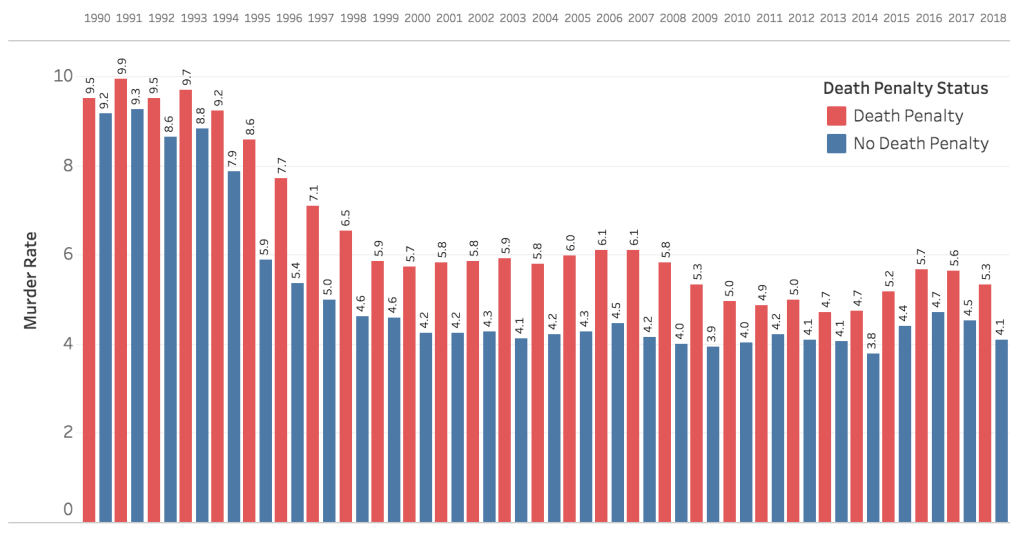
A common argument among those who support the death penalty is that it makes society safer, as capital punishment deters people from committing violent crimes. However, there is no statistical evidence to demonstrate a credible relationship between the death penalty and lower crime rates. On the contrary, states that do not allow the death penalty have consistently had lower murder rates than states that do allow the death penalty. Essentially, the idea that state-sanctioned executions is a tool to discourage violent crime is categorically false.
Now, let’s examine how the justice system has repeatedly failed to live up to its name. Since 1973, 185 people have been exonerated and released from death row. For every 9 people executed, one person on death row has been exonerated. This is a shocking rate of error that shows a glaringly obvious problem with our criminal justice system, and it seriously brings into question the effectiveness of how the death penalty is implemented. Think about how many innocent people have suffered on death row and were almost killed, had it not been for their exoneration coming just in time. Even worse, imagine how many people have been executed who were innocent all along. There is no way to know exactly how many innocent people have fallen victim to the death penalty, but based on the rate of error, we can comfortably say that there have been far too many people who have been murdered at the hands of the state.
But what about “innocent until proven guilty”? Wouldn’t the legal principle of the presumption of innocence prevent so many innocent people from being put on death row? Wrongful convictions can be attributed to a wide range of factors, including erroneous eyewitness testimony, false and coerced confessions, false or misleading forensic evidence, and inadequate legal defense. More often than not, capital punishment is imposed on those who cannot afford to hire an effective lawyer. In addition, witnesses often make false accusations in exchange for lenient treatment or other incentives for their testimony. In 2018 alone, 111 exonerations involved witnesses who lied on the stand or falsely accused the defendant. To make matters worse, corrupt and dishonest behavior by police and prosecutors also play a major role in wrongful convictions. Police and prosecutorial misconduct were involved in 79% of homicide exonerations in 2018.
We have a deeply flawed justice system. The desire to achieve convictions rather than deliver justice has poisoned our justice system to the point where it is no longer trusted by the public. Is it possible to keep the death penalty in a system that is just too unreliable?
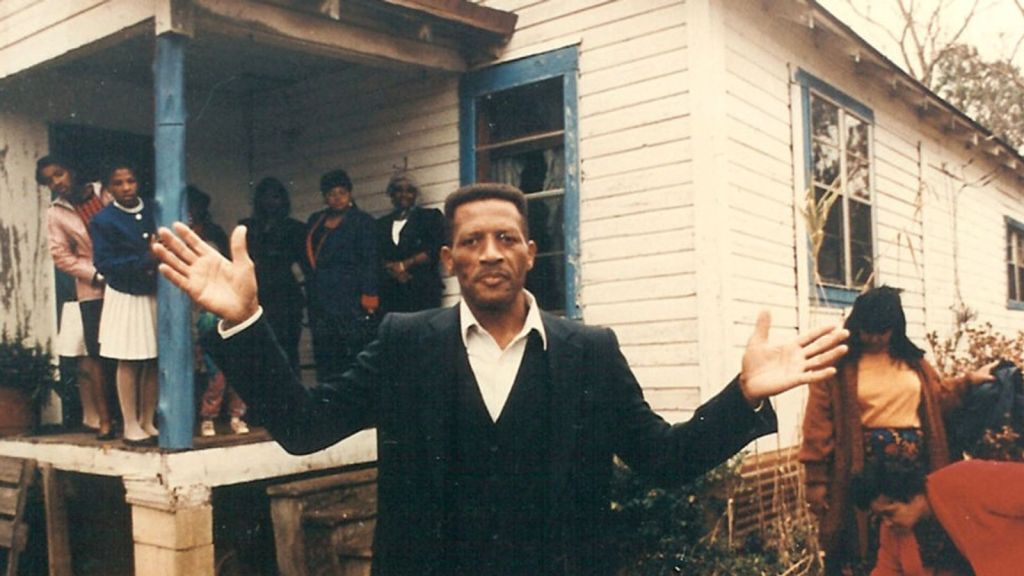
Now, let’s look at a further dimension of the justice system that adds a layer of complexity to the death penalty question: racial bias. The current U.S. death row population by race is 42.2% white and 41.6% black. The race of defendants executed in the U.S. since 1976 (when the Supreme Court allowed the restoration of the death penalty) is 55.7% white and 34.1% black. Keep in mind, black people represent just 13.4% of the U.S. population.
At the time of my research, I still felt like I needed more evidence to believe that our criminal justice system was truly racially biased. I did some more digging, and I found some pretty damning evidence that race played a major role in how the death penalty was being applied.
“In 82% of the studies [reviewed], race of the victim was found to influence the likelihood of being charged with capital murder or receiving the death penalty, i.e., those who murdered whites were found more likely to be sentenced to death than those who murdered blacks.”
-United States General Accounting Office, Death Penalty Sentencing, February 1990
After reading this quote, I wanted to find some hard evidence to back up this statement. Let’s take a look at some statistics regarding the race of the victims whose perpetrators were executed, since 1976.
75.7% of the victims were white, while 15.2% of the victims were black. As we can see, the gap between whites and blacks is much larger here compared to the relatively even percentages of white and black people on death row. Essentially, the justice system is much quicker to pounce on the opportunity to execute someone who killed a white person compared to someone who killed a black person.
Let’s take it one step further: interracial murders since 1976. In cases where there was a white defendant and a black victim, there were 21 executions. Do you know how many executions there were when the races were reversed (a black defendant and a white victim): 297. That’s 21 vs. 297! That is a huge difference in how the justice system treats interracial murders. Now, I am not defending the individual murderers. I would never defend a killer. However, it is clear that the justice system as a whole seems to be more willing to execute a black person when they are given the chance, especially when the victim is white.
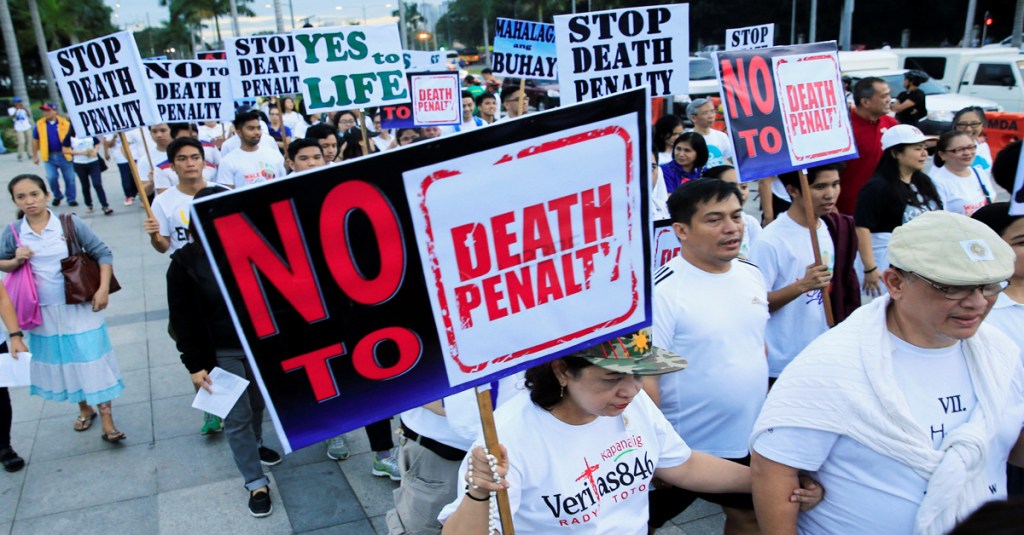
I want to reiterate my opposition to abolishing the death penalty. I still think that it is important to at least keep capital punishment on the federal level. There are just too many heinous murders that I would hate to see go unpunished. I find it to be unfair when those who commit the most atrocious killings get the luxury of living the rest of their life in relatively comfortable conditions in prison. However, to say that we have a reliable, fair, and unbiased criminal justice system does not hold up under careful examination.
Perhaps we can find some middle ground. Maybe we can make some reforms to how and when the death penalty is carried out, rather than just completely abolishing it. Maybe we can give special attention to capital punishment trials in order to ensure that the defendant received a fair trial. The justice system is proving to be too unreliable to treat these death penalty cases just like any other trial. It should not be this easy to send innocent people to death row, as has happened far too often in the past. I propose that in cases where capital punishment is on the table, the defendant should receive a second confirmatory trial that is completely independent of the initial trial. While this would certainly prolong the process, it would be a step towards being more careful in ensuring that justice is delivered in cases that result in the state-sanctioned killing of a human being.
While this would not magically solve all of the problems in our justice system, I believe it to be a step in the right direction towards achieving equal justice for all.
 All Things Tennis and Politics