The Civil War: the greatest moral and political crisis that the United States has ever faced. The nation was torn apart, as America was divided into two separate countries: the Union in the North, and the Confederacy in the South. The only major controversy that separated the politics of these two countries was the right of the government to intervene on the issue of slavery. Unlike in the Union, the Constitution of the Confederacy explicitly stated that the government at any level had absolutely no authority to limit the institution of slavery in any way, shape, or form. It is critically important that we understand what truly caused this terrible war, and how people have tried to distort history in order to preserve their own reputation.
In the decades leading up to the Civil War, the question of slavery was the elephant in the room. There had been a number of laws, both at the federal and state level, that had both upheld and restricted the expansion of slavery. The conflict over slavery foreshadowed a disaster that was waiting to happen. That disaster came with the start of the American Civil War in 1861, which would rage on to become the deadliest conflict in United States history.

For this article, I want to avoid recounting all of the historical events that led up to the outbreak of the Civil War. The main point is this: slavery was the cause of the war. In my opinion, there should be no significant debate on this issue, as the evidence is abundantly clear. Every major event that led up to the war, including the Kansas-Nebraska Act, Bleeding Kansas, the Dred Scott Supreme Court ruling, and the election of Abraham Lincoln, was centered on one major issue: the status of slavery. The American South saw that their beloved institution of slavery was being threatened, even if the federal government was only trying to limit its expansion. President Lincoln specifically said that he only intended to stop slavery’s expansion into new territories in the West, and that he had not the power nor the inclination to destroy slavery where it already existed in the Southern states. But Lincoln was still an abolitionist in the eyes of the South, and they responded to his election by seceding from the Union and fighting for slavery’s preservation and perpetuation.
Even without reading into the historical details that prove slavery’s central role in causing the war, you can read these quotes from the Civil War era and reach the same conclusion:
“The South is invaded. It is time for all patriots to be united, to be under military organization, to be advancing to the conflict determined to live or die in defense of the God-given right to own the African.”
-Richard Thompson Archer, Mississippi planter, Dec. 8, 1859
“The question of Slavery is the rock upon which the Old Government split: it is the cause of secession.”
-G.T. Yelverton, of Coffee County, Alabama, speaking to the Alabama Secession Convention, Jan. 25, 1861
“The fundamental cause of the imperiled condition of the country is the institution of African servitude, or rather, the unnecessary hostility to that institution on the part of those who have no connection with it, no duties to perform about it, and no responsibilities to bear as to the right or wrong of it.
-Senator William Bigler of Pennsylvania, Jan. 21, 1861
“The new Constitution [of the Confederacy] has put at rest forever all the agitating questions relating to our peculiar instiution—African slavery as it exists among us—the proper status of the negro in our form of civilization. This was the immediate cause of the late rupture [secession from the Union] and present revolution.”
-Alexander Stephens, Cornerstone Speech, Mar. 21, 1861
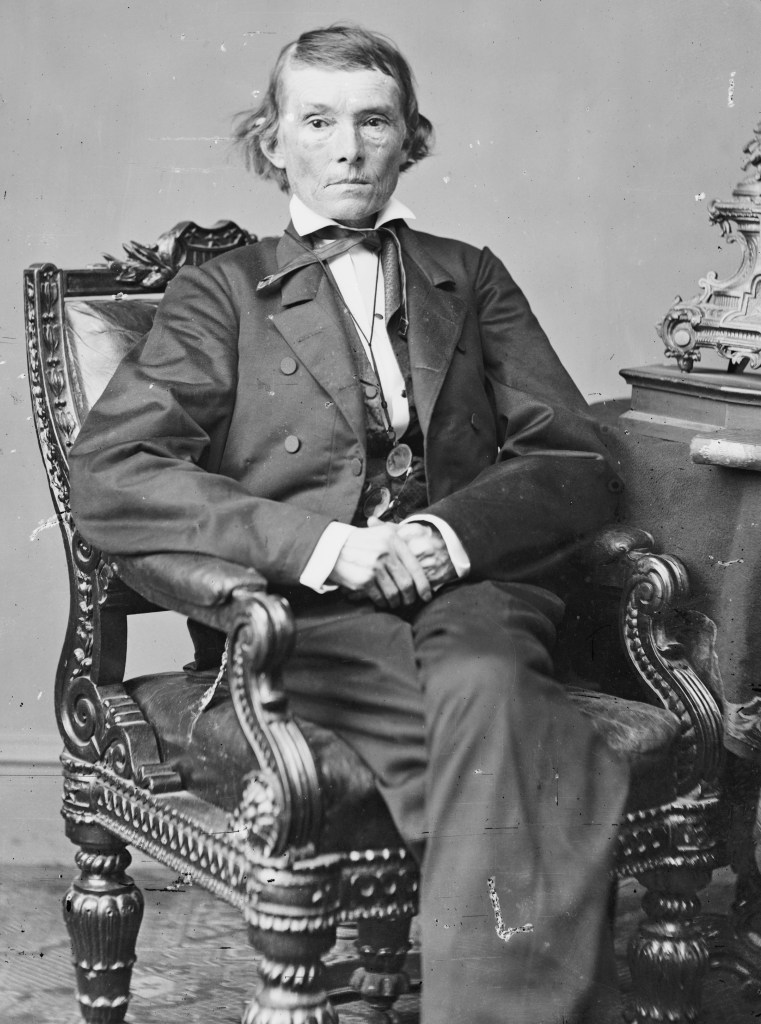
I can go on and on about the unlimited evidence proving that the South’s desire to protect their “peculiar institution” was the one true cause of the Civil War. But the vast majority of surveys show that the nation is still divided over this question. Some surveys show that only a slight majority believe that slavery was the root cause of the war, while other surveys show that a slight majority believe that “states’ rights,” among other reasons, caused the outbreak of the war. These surveys raise a serious question: why have so many Americans been led to believe that slavery was not the fundamental cause of the Civil War?
The answer to this question is a negationist, pseudohistorical myth known as the Lost Cause, whose main purpose was to perpetuate the notion that the South was justified in seceding from the Union and forming the Confederacy. The myth claims that the Confederate army fought not for the protection of slavery, but for a heroic cause against the tyranny of the U.S. federal government.
How did the South manage to brainwash such a large portion of their population into believing the Lost Cause myth to be true?
The term was coined by Edward Pollard, a Confederate sympathizer, in 1866 when he published The Lost Cause: A New Southern History of the War of the Confederates. He argued that the U.S. Constitution gave states the right to govern themselves independently and free of intervention from the federal government. Therefore, he contended, the essence of the Southern rebellion was not the defense of slavery itself; rather, they were defending each state’s right to choose for themselves whether or not to allow slavery. This logic was exploited by pro-Confederate Southerners, who twisted their former support of slavery and white supremacy into a patriotic defense of the Constitution and “states’ rights.” Supporters of the Confederacy, desperate to justify the devastating war that they had created, were quick to spread the narrative of the Lost Cause. Unfortunately, they have been quite successful in doing so. One organization that has contributed to the success of the Lost Cause is the United Daughters of the Confederacy (UDC).
The UDC was founded in 1894 in Nashville, Tennessee. Composed of middle- to upper-class white Southern women, the main purpose of the UDC was to pass down the ideas of the Lost Cause to future generations in the South. The UDC took pride in perpetuating a false legacy that the Confederates heroically sacrificed for a good cause. They raised thousands of dollars to build monuments commemorating Confederate soldiers on courthouse lawns. They hung up portraits of Confederate leaders and generals in public schools. They made sure that the horrors of slavery were removed from school textbooks, teaching that slavery was actually a benevolent institution that benefitted both white people and black people. More importantly, they monitored these textbooks to make sure that slavery was in no way portrayed as a cause of the war.
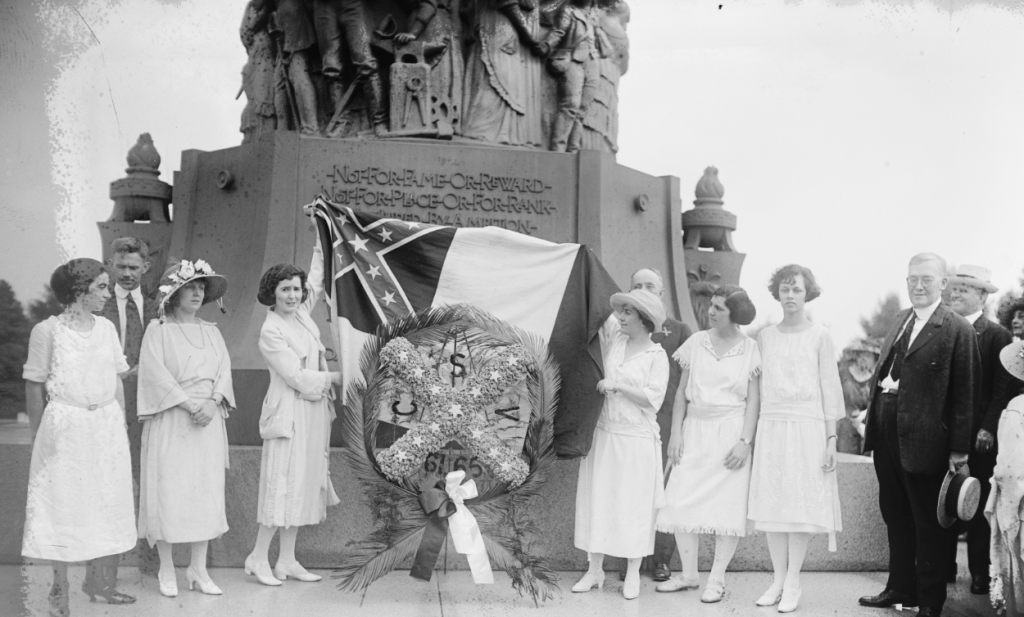
In her pamphlet A Measuring Rod to Test Textbooks, and Reference Books in Schools, Colleges and Libraries, Southern historian Mildred Lewis Rutherford devised a set of parameters that authors should follow when writing educational books, particularly for children. The pamphlet was shared with school boards throughout the South, and UDC-backed committees kept an eye on textbooks to make sure that they were teaching a narrative that they approved of. Take a look at some of the guidelines in the pamphlet:
“Reject a textbook that does not give the principles for which the South fought in 1861, and does not clearly outline the interferences with the rights guaranteed to the South by the Constitution, and which caused secession.
Reject a book that calls the Confederate soldier a traitor or a rebel, and the war a rebellion.
Reject a book that says the South fought to hold her slaves.
Reject a book that speaks of the slaveholder of the South as cruel and unjust to his slaves.
Reject a textbook that omits to tell of the South’s heroes and their deeds when the North’s heroes and their deeds are made prominent.”
These criteria for Southern textbooks are clear evidence of the South’s attempt to whitewash history and indoctrinate future generations into believing the myth of the Lost Cause.
The actions of the UDC succeeded in doing two main things: painting the Confederacy in a positive light, and minimizing the evil of slavery and its role in causing the Civil War.
Now that we understand how the UDC managed to brainwash the South into believing the Lost Cause, let’s look at the bigger picture and ask ourselves an important and necessary question: Why? Why would the Southern states, who had so proudly fought to preserve slavery, suddenly begin denying that the war was ever about their “peculiar institution”?
Prior to 1865 (the end of the Civil War), the consensus of the South was that slavery was a good-natured institution that ought to be upheld as the cornerstone of the Southern way of life. However, in the aftermath of the Confederates’ defeat, the abolition of slavery via the 13th Amendment to the Constitution forced the Southern states to acknowledge a harsh reality: their beloved institution of slavery had been discredited not only in America, but in the eyes of the world. It came as a shock to the South that if slavery was no longer recognized as a legitimate institution (both domestically and internationally), then the legacy of the Confederacy itself would have a bad reputation in the eyes of history. In order to protect their image and be on the “right side of history,” it became a psychological necessity for Southerners to distort their past on why they seceded and fought a rebellious war against their own country.
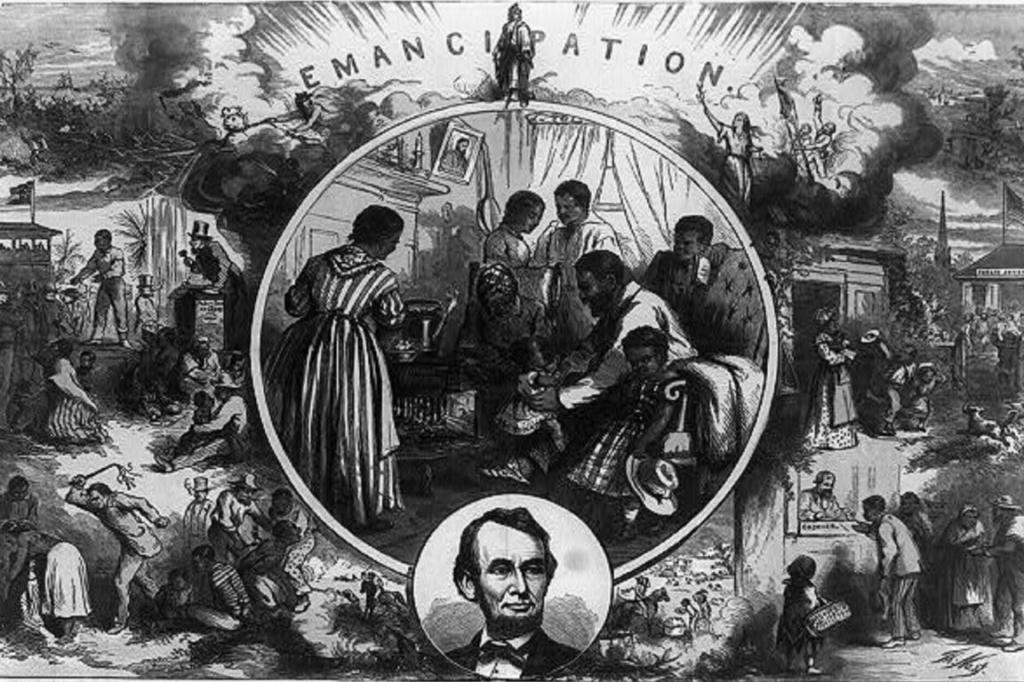
The notion of “states’ rights” became the predominant justification in the South for the war that they had created. However, when a Confederate sympathizer uses this as an argument to defend the legacy of the Confederacy, I ask them: states’ right to do what? If you make the case that the federal government was overstepping its bounds by abridging the rights of states to govern themselves, then you have to identify what these rights were. What was the right that the South fought to maintain? None other than the protection, preservation, and perpetuation of the morally repugnant institution of chattel slavery.
When we study history, we must avoid looking at events in a vacuum. We must examine how certain historical events impacted future developments. This directly applies to the Lost Cause, as the propagation of this pseudohistorical myth had major ramifications on race relations in the United States.
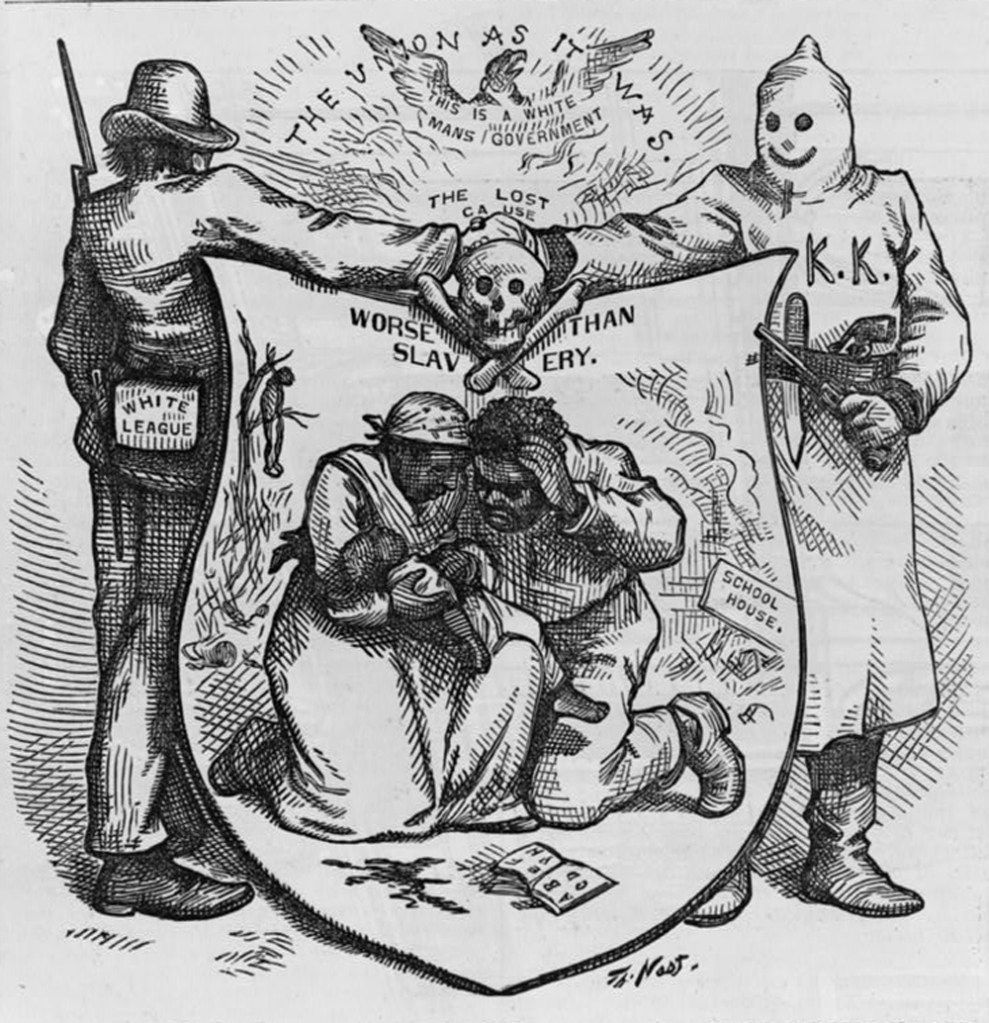
The Lost Cause is a disturbing example of people being confused and misguided about their history. If people do not understand the bad things that happened in the past, we are more likely to repeat it, or at least something similar to it. The Lost Cause has made people overlook the role of racism and oppression of African-Americans in the Civil War era. Many people prefer to look at the positive aspects of America, without owning up to the racist parts of its history, including how proudly the South fought to maintain institutions that subjugated black people in the name of white supremacy. Frederick Douglass, a formerly enslaved man and prominent abolitionist, feared that the erasure of slavery from the legacy of the Confederacy and the Civil War would contribute to the failure of the federal government to protect and uphold the rights of the newly freed black population. Douglass could not have been more correct in his fear.
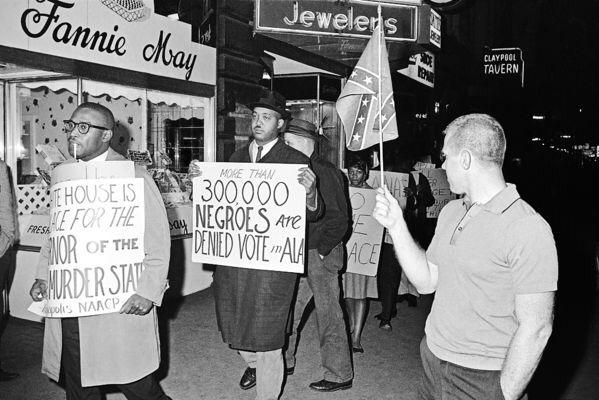
The violence unleashed on the black community after the Civil War, as well as the oppression of the black population during the Jim Crow era, have proven Douglass’ fears to be valid. I argue that the Lost Cause played a major role in the subjugation of black Americans in the post-slavery era. At the very least, the Lost Cause contributed to the complicity of both the government and the people to the abuse and maltreatment of African-Americans in the South.
In the context of today’s America, the Lost Cause has fueled a ridiculous debate over whether the Confederate flag symbolizes hatred and racism, or honest pride in Southern heritage. While the answer is clearly the former, organizations like the United Daughters of the Confederacy want you to believe the latter to be true. While many people have fallen for the lies perpetuated by the UDC and other pro-Confederate groups, we can still take an active role in recognizing the moral failures in our past and seeing how we can try to make them right.
Many people argue that labeling America’s past as racist is fundamentally anti-American. But to me, critiquing America’s history because you want to make the country better is the most patriotic thing you can do. In fact, I find this to be far more pro-American than believing in a pseudohistorical myth that ignores the wrongdoings of a country to protect its reputation.
 All Things Tennis and Politics