
As you probably know by now, my tennis articles focus on the mental side of the game. My whole life, I have been told things like “tennis is mental” or “tennis is more than hitting a ball with a racket.” While I sort of understood what this meant in theory, I did not grasp what the mental game was actually composed of, nor did I understand how it applied to me as a player. In my previous articles, I have talked about mental topics such as toughness, change, nerves, and performance under pressure. For this article, I will unfold a new aspect of the mental game that I believe to be an underrated and underappreciated part of tennis: personality.
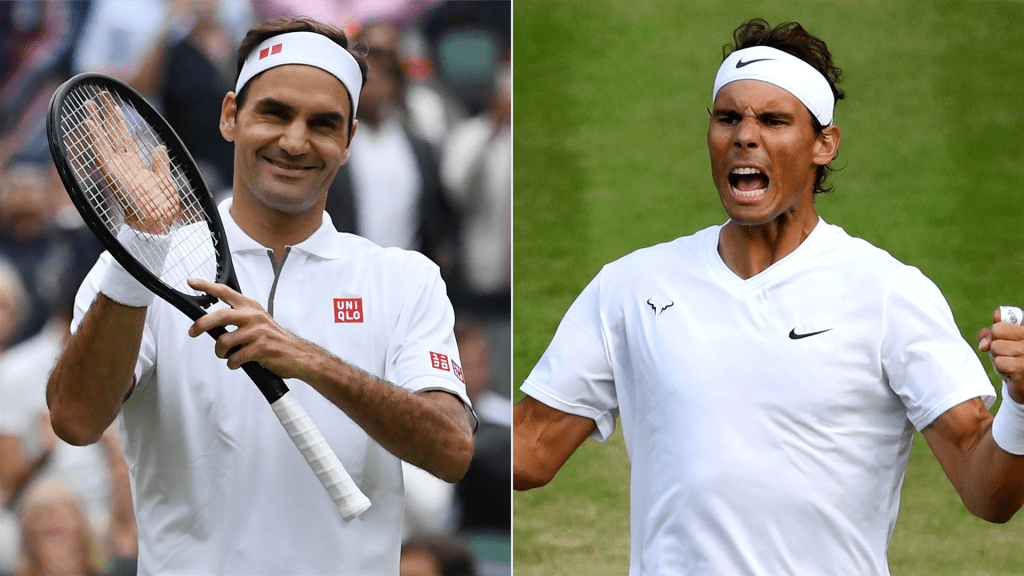
I have been watching professional tennis for as long as I can remember, and my two favorite players have always been Roger Federer and Rafael Nadal. After years of watching these two icons at the top of the game, it became clear how different their personalities were from one other. Generally speaking, Federer is a relaxed, easygoing guy, while Nadal is more intense and meticulous with how he carries himself. Once I understood the details and nuances of their personalities, I related them to their respective game styles. The connection could not have been more clear.
The relaxed nature of Federer’s personality has translated into his effortless strokes and ability to initiate his own offense in the point. The punctilious personality of Nadal has shown up in his game in the form of intensity and fierce grit, while also being careful to consistently keep the ball in the court.
Game style has a direct correlation with the personality of the player. How you play is a physical manifestation of your intrinsic characteristics and dispositions. At the end of the day, these are human beings we are talking about. We get so used to watching these guys play that we take them for granted. We see them as tennis machines. But these guys are human beings just like the rest of us, and what they do in their occupation is a reflection of who they are as a person.
I want to shift our focus to my realization of this mental concept in my own game. As I have said previously in my blog, I have a meticulous personality in how I carry myself and the routines that I follow. For simplification, I will refer to my scrupulous personality as following my “specific routine.” I have learned that in order to settle my nerves before a tennis match, I follow a certain set of procedures that I prepare for myself. I started playing tennis at the age of four, and when I first started competing, my number one concern was to not miss. I was not too concerned about hitting winners or trying to dictate every point. But I did try to keep the ball going as long as possible until my opponent would eventually miss a shot before I would. Just like I would never want to mess up my “specific routine,” I would never want to miss a shot. Naturally, my desire to make as many shots as possible and avoid missing at all costs translated into my counterpunching game style. Over time, I began to play more aggressively to make my game more effective at the highest level, but only to a certain extent. While aggression was certainly a part of my game, counterpunching was still the core of my identity on the court.
There was a time in my tennis career when I tried to make some pretty drastic changes to my game. I felt like something was missing: my counterpunching style was limiting me from taking my success to the next level. I decided that I needed to shift to a more aggressive style in which I would try to initiate and dictate points on my own, rather than play in a more reactive fashion. To put it bluntly, this attempt at radical change did more harm than good.
Something just felt off. As I have said before, my personality demands that I feel in control of myself and my game. The changes that I tried to make caused me to feel out of control. What I learned was this: trying to change your game style to something that is in conflict with your personality is a recipe for disaster, since you are doing something that is not naturally you. To perform well on the tennis court, you must stick with your natural game style that is in balance with your innate personality traits.
A few articles back, I mentioned the importance of being able to step outside of your comfort zone in order to make necessary changes to your game. I talked about how I was trying to incorporate aggressive baseline play into my game style. However, I have had some mental realizations since then, so I would like to modify my position on that issue: change and adaptation must take place within your game style. What you should not do is make such a dramatic change that you are altering your game entirely. For example, I have added more aggression into how I play. Using my forehand as a weapon has become a critical part of how I try to win points. However, despite the aggressive nature of my forehand, I am still a counter-puncher at heart. Yes, I do have aggressive elements in my game; but my style of play still revolves around trying to make as many shots as possible, even if that means reacting to what my opponent does. Keep in mind, when I say that I “react to my opponent,” in no way does this mean that I am playing careful, tentative tennis. That is just about the worst thing you can do on a tennis court. It just means that you still hit every ball with aggression, but you do so in response to what your opponent is doing, rather than trying to initiate the point yourself. This nuance is something that has taken several years for me to realize, and it has been a central part of my journey as an athlete.
At this point in my blog, you probably know that I always connect my tennis experiences to my life as a human being. This lesson has taught me a particularly valuable lesson that I believe is worth sharing: if you are trying to achieve something, you must do so by following a path that is true to you. Do not try to be someone you cannot be or do not want to be. The best way to achieve success is to do it your way, in a way that corresponds to your personality. Yes, you need to make changes along the way; but these changes must happen while staying within yourself.
 All Things Tennis and Politics