This is my second consecutive politics article on the topic of the COVID-19 pandemic. In my last politics article, I examined ideological approaches to pandemic policy, particularly how many conservatives have adopted libertarian stances in response to a perceived threat to their individual liberties. For today’s article, I will articulate my beliefs on certain pandemic policies, specifically regarding vaccine mandates. I highly recommend reading my last politics article before reading this one, as the previous one provides important context for this article.

Many people do not realize that opinions on pandemic policy can be nuanced. They do not have to be so straightforward and one-dimensional. You do not have to either be a freedom-loving American who is careless about public health, or a pro-science person who wants to demolish people’s individual freedoms. Political polarization has been exacerbated by the pandemic, and it has caused people to believe that the other side is evil. The generalization typically sounds something like this: conservatives do not care about the lives of hundreds of thousands of people, while liberals are using the pandemic to justify tyranny and the destruction of people’s liberties. Our political discourse does not have to be this way. There is room for people in between, who desire a more balanced approach to pandemic policy. We must protect the safety of our citizens in a public health crisis; but we must not allow the government to recklessly annihilate people’s livelihoods.
Before we get into how I view vaccine mandates, let’s first define our terms: what does it mean to be “pro-vaccine”? Contrary to popular political labels, being pro-vaccine is more nuanced than many people realize. I interpret “pro-vaccine” as supporting the science behind the vaccine and believing that vaccination is in the best interest of individuals and society as a whole. This describes how I feel about the COVID-19 vaccine. I did my research on the vaccine, and I concluded that it was best for me, my family, and society if I got vaccinated, which is what I did in May of this year. I am pro-vaccine, meaning that I support as many people getting vaccinated as possible. But this does not mean that I support government mandates forcing people to get vaccinated. Let’s take a closer look at what I mean by this.
From a purely scientific perspective, I unequivocally support the vaccine. While there are still breakthrough cases in which vaccinated people contract the virus, it is extremely effective in keeping people out of the hospital and preventing serious illness or death. If it were up to me, I would encourage every person in the world to get vaccinated if they had the opportunity. Notice how I said “encourage.” This is an important detail that encapsulates my perspective on how vaccine policies should be implemented.
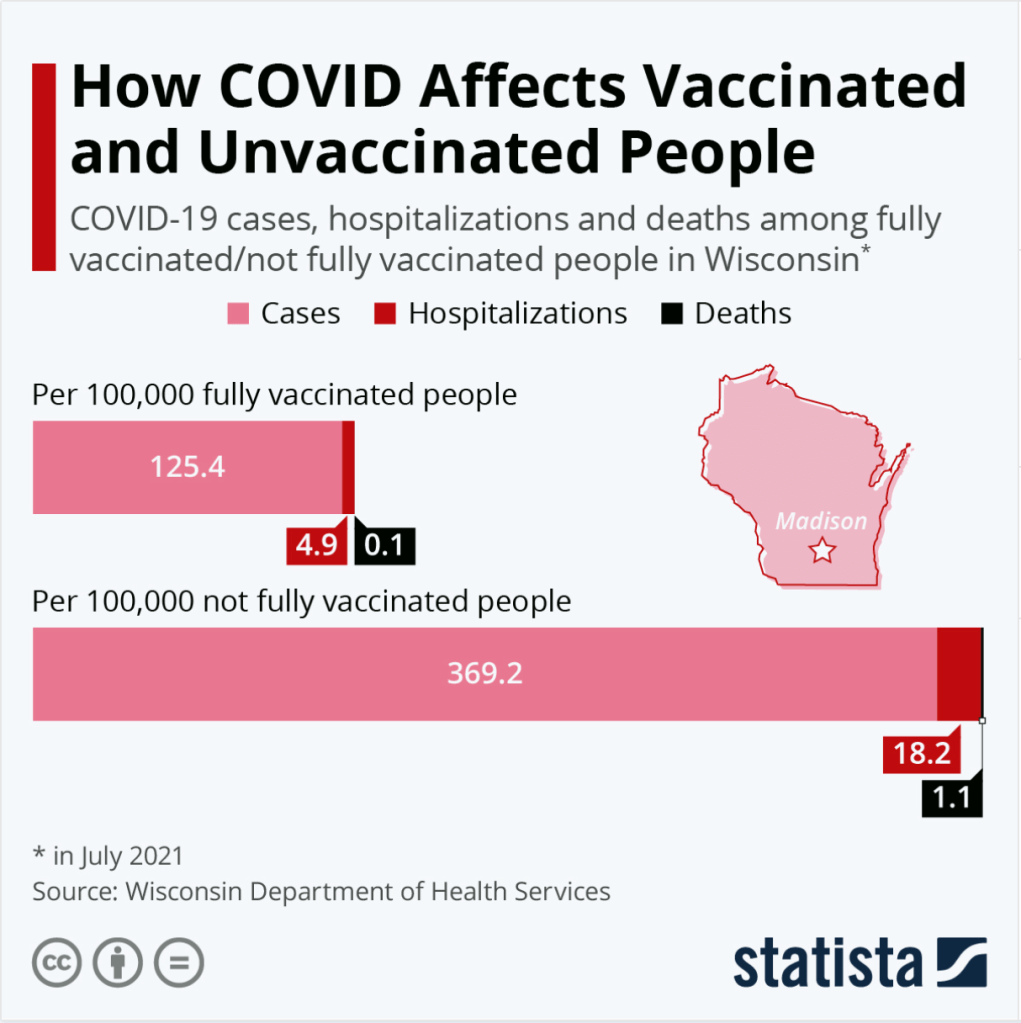
It has been proven that vaccines are an incredibly effective public health tool; but there is still a sociopolitical variable that we must take into account.
In a free country like the United States, people have the right to maintain a degree of bodily autonomy, particularly when it comes to drugs. Vaccines are a type of drug. Injecting a drug into your body should remain a personal medical choice, meaning that the government should stay out of it as much as possible. In this respect, there is a certain degree of freedom that must not be infringed upon by government mandates. I will discuss a few reasons why.
During the experimentation and approval process in developing a safe and effective vaccine, there are problems worth examining. Drug companies and the government are nowhere near perfect. Compared to the hundreds of millions of Americans taking the vaccine, the sample size of the testing and experimental phase was tiny. Thousands of people were used as test subjects for the vaccine, while hundreds of millions of people would be subject to a potential vaccine mandate(s). There is no feasible way to conduct a near-perfect testing phase for a vaccine or any type of drug. The small sample size is one of many flaws in the process of testing and approving a vaccine.
I am not arguing that the vaccine is not to be trusted. I believe that the benefits of everyone taking the vaccine are far greater than any potential costs. I also believe that there is a strong scientific basis for why this vaccine is effective, as I have made clear. However, that does not mean that I trust the process completely. It is far from perfect, and it never will be perfect. Vaccine companies (and all other drug companies) reserve a considerable portion of their profits for lawsuits dealing with cases of detrimental side effects. These drug companies understand that their product is never fully safe, which is why they are fully prepared to defend their product in a court of law. There have been FDA-approved drugs that were later taken off the market because they were no longer deemed safe. Am I saying that this will happen with the COVID-19 vaccine? Absolutely not. I trust the science that went into this vaccine, which is why I still support it. However, I also recognize that the system is inherently flawed, as there is simply no way to make it perfect. Since the system is not perfect, I argue that government mandates are a step too far.
This is a common argument made by those who are pro-vaccine but oppose government mandates: when there is risk, there must be choice. Until the system is perfect, there must not be government mandates forcing people to take a vaccine against their will. On top of that, the government should not be the only decision-maker when it comes to taking the vaccine. What if your doctor advises you not to take the vaccine due to your personal medical situation? One could argue that there could be exemptions, but who gets to decide whether an exemption is granted? Do we give that power to the government, as well? What if the exemption gets denied, even if you believe that there is a legitimate reason to not get vaccinated? There are simply too many messy situations that can result from government vaccine mandates.
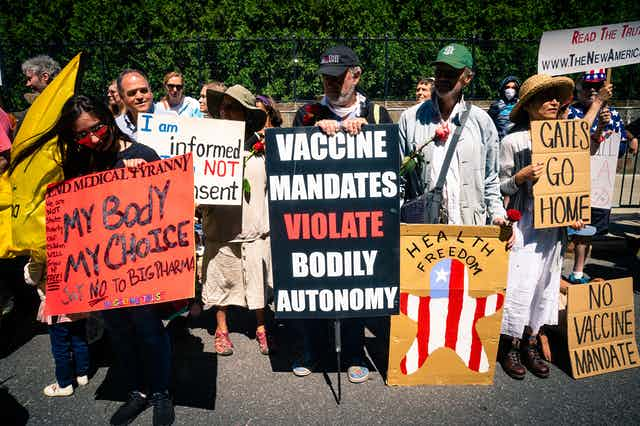
I would be totally fine with the government encouraging and endorsing the vaccine; in fact, I believe that the government has a responsibility to do this. But I do not support the government forcing private businesses to mandate vaccines for their employees. This is a common tactic that governments use to mandate vaccines. Technically, it is the business that is mandating vaccines for their workers; but in reality, it is the government that is in total control of the situation. I am opposed to this kind of government coercion, as I believe that it is an illegal encroachment of the government onto the private sector. This carries right into my next argument.
My philosophy with vaccine mandates is that the public and private sectors should remain separate and independent, similar to how the branches of government work. If a private business requires their workers to get the COVID-19 vaccine, then I would support the right of that business to protect the health and safety of its workers and customers. The same would apply to a private educational institution. If a private school or university required that all students, teachers, and staff get vaccinated, then I would support their right to protect the well-being of the school’s public health. Keep in mind, you do not have the God-given right to attend a school like Harvard University, for example. If Harvard decides that getting the COVID-19 vaccine is a prerequisite for attending their university, then you must comply with their rules. At the end of the day, you are not required by law to get the vaccine if you do not want to; you simply will not get the privilege of attending Harvard.
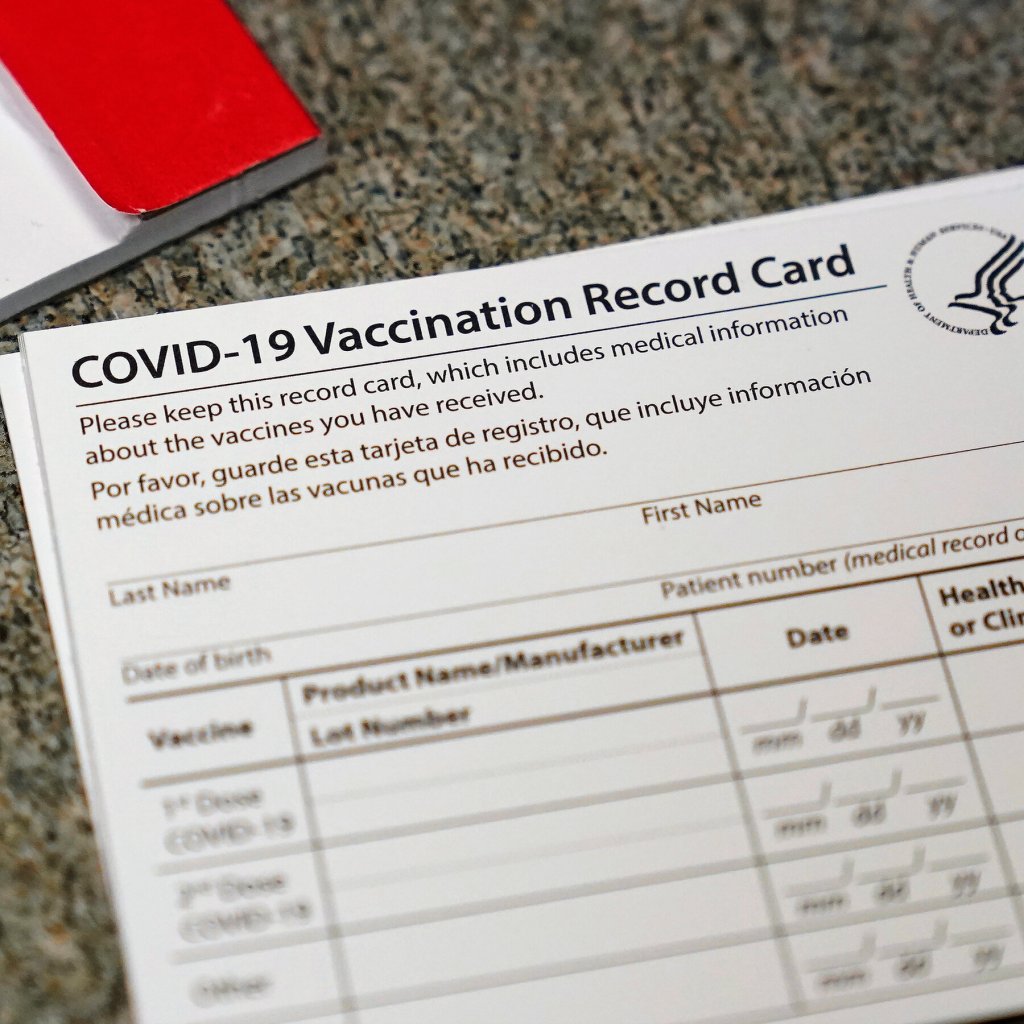
Some people are more strongly against vaccine mandates than I am. These people are against mandates in both the public and private sectors. They argue that vaccine mandates in private businesses still infringe on people’s bodily autonomy and right to make their own medical choices. However, I maintain that a business has the right to make decisions that are in the best interest of the company. For example, businesses want to prevent COVID outbreaks in the workplace, since they want to avoid employees and customers getting sick. So if a private business makes their own mandate for a COVID vaccine, then I would support their right to do so. Those who oppose private mandates argue that it is a violation of civil rights and equal protection. They claim that denying a job or service to someone based on vaccination status is equivalent to discriminating against their race or religion. However, I have a major problem with this reasoning.
Race, religion, or any other identifying characteristic is not a valid reason to deny someone service or employment. If an employer says that a black man working in his business is a “threat to the safety of the business,” that would be a totally ridiculous and discriminatory reason to fire that worker. Comparing race to vaccination status is a huge leap in logic. They simply do not belong in the same category. Being unvaccinated can be a legitimate threat to public health; being part of a racial group or any other identity group is not a societal threat. Therefore, I believe that a private business can make the decision to mandate vaccines for all workers and customers. I also believe that it is unfair to make a comparison between vaccine mandates and discrimination based on race.
I would also like to push back on those who support government vaccine mandates. A common argument is that your freedom of choice ends when that choice impacts others. Being unvaccinated can harm those around you, meaning that you no longer have the unrestricted freedom to choose whether to get the vaccine. They often compare vaccine mandates to drunk driving laws: the government can mandate vaccines to protect public health, just like the government passes laws against drunk driving to keep the public safe. But there are some problems with this logic. Not allowing someone to do something is different from forcing them to do something against their will. If that sounds confusing, let me clarify: requiring someone to get vaccinated is not comparable to requiring them to refrain from doing something (in this case, drunk driving). It is fine for the government to pass laws that prohibit people from doing dangerous things, such as walking into schools with a gun, or driving on the highway while being heavily intoxicated. However, it becomes problematic when the government is forcing you to take a vaccine that you may be hesitant about.
As I mentioned earlier, my number one concern with the issue of mandatory vaccination status is the independence of the private sector from the public sector. As I have said before, I am against the government forcing private businesses to mandate vaccines. But I am also opposed to the government prohibiting those same businesses from mandating vaccines. For example, I would oppose a governor passing an executive order requiring all private businesses to not have vaccine mandates. I believe this to be an illegal encroachment of the government onto the freedom of businesses. These businesses have the right to decide what is in the best health interest of their work environment.
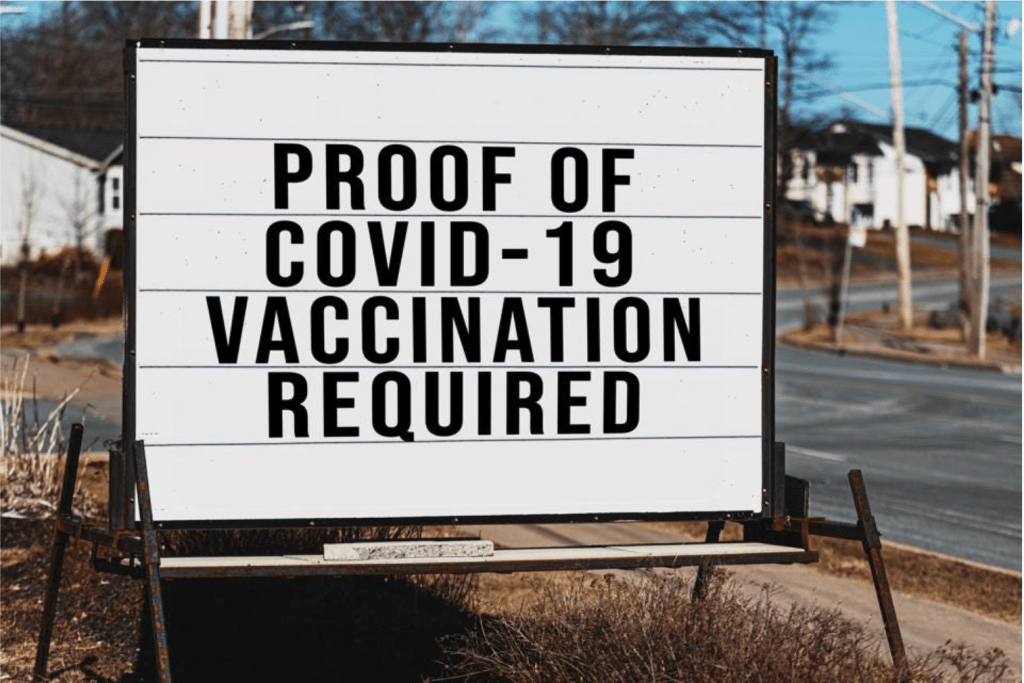
The question of vaccine mandates has been at the forefront of the political division that has characterized this pandemic. This debate ties into the conflict between freedom and order (more on this in my previous politics article). In this case, freedom refers to the right of citizens to decide whether or not they want to take the COVID-19 vaccine. On the other hand, order refers to the safety of the community in a public health crisis. It seems as if the pre-pandemic political division prepared us for the political polarization that the COVID-19 vaccine has caused. However, having a nuanced viewpoint on this controversial pandemic policy is a step toward finding some common ground.
 All Things Tennis and Politics