Up until now, my politics articles have been centered on domestic American politics. However, I find it critically important that we do not reduce our analysis to within the borders of the United States. Due to the U.S. playing such an influential role on the global stage, we must critique how American foreign policy has impacted governments, nations, and peoples all over the world. While the U.S. has left its mark in nearly every corner of the globe, nowhere have the repercussions been more significant than in the Middle East. But some people forget the consequences of European imperialist policies in the region, which took place well before the Americans even looked in that direction.
We will go through a comprehensive overview of European and American foreign policies in the Middle East over the last century, examining how this Western presence helped shape the Arab and Muslim worlds today. To fully understand America’s role in the Middle East, we have to turn back the clock to the outbreak of World War I.
At this point in time, the Arabs (an ethnolinguistic group originating from the Arabian Peninsula) did not have a country of their own. There had previously been powerful Arab Muslim empires spanning the entire Middle East and North Africa, reaching as far east as Pakistan and as far west as Portugal. These empires were ruled by a string of caliphs, Muslim political and religious leaders who were regarded as successors to the Prophet Muhammad. The Islamic world was arguably the strongest polity of its time.
Let’s fast forward to 1914, the beginning of the First World War. The Arabs had been subjects of the Ottoman Empire for over six centuries, ruled by a Turkish sultan (Muslim ruler). While the Arabs and the Turks had a common religion (Sunni Islam), they were ethnically different, meaning that they were still considered to be different groups of people. Over time, the Arabs had grown tired of oppressive Turkish rule, which sparked the Arab nationalist movement and the Great Arab Revolt. Yearning for an independent state, the Arabs agreed to fight alongside the British against their common enemy, the Ottomans. In exchange for their alliance, the British promised the Arabs a united Arab state, free of Turkish or European control. Little did the Arabs know that they were being lied to by the British, and this betrayal would be the start of a series of devastating events for the Arab people.
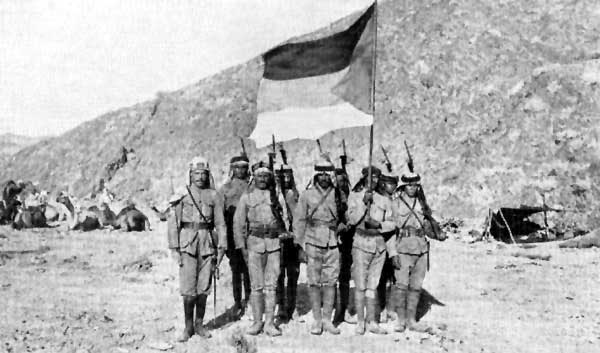
To the shock of the Arabs, the Allied powers had secretly been planning to divide and colonize the Arab world after the fall of the Ottoman Empire. In what became known as the Sykes-Picot Agreement, the British and the French drew borders that would carve up the Middle East into separate Arab countries. These borders completely ignored local differences and aspirations, such as language, ethnicity, or regional identity. The British and the French imposed authoritarian regimes in each of these newly-fabricated Arab states, each with their own king that was sure to remain loyal to European colonial interests. All the while, the British and the French maintained their colonial control of the region, which completely violated the British agreement with the Arabs during the war. Unsurprisingly, this infuriated the Arab peoples living across the Middle East, especially the most passionate of Arab nationalists who were rightfully expecting a united and independent Arab state. Even after the British and the French left the region, the borders remained, and the Arab world has been divided in this way ever since.
Let me be clear: the eventual withdrawal of British and French troops from the Arab world did not wipe out their influence in any way. The political, economic, and cultural systems that had been imposed on the region maintained a firm grip over the societies of the several Arab countries. This continues to be the case today.
Now that we understand the Europeans’ role in shaping the political climate of the Middle East after the First World War, let’s analyze how the United States has played its part in transforming the region.
The devastation caused by World War I showed how much military warfare had changed. Battles were now fought with advanced technology and machinery that needed to be fueled by an extremely valuable commodity: oil. The U.S. realized that access to oil would determine which countries would be powerful. This motivated the Americans to turn East to see if they could find some of this oil that they coveted.
The American story in the Middle East started in the 1930s, when a company in California began its search for oil in the deserts of Saudi Arabia, one of the Arab kingdoms created by the Sykes-Picot Agreement. Despite the strong anti-Western sentiment among the Saudi people and the royal family, the Saudi government agreed to let the California company look for oil. The company succeeded in discovering vast amounts of oil all over the Arabian desert. Within the next few years, the Americans began setting up small cities around the oil operation, realizing the economic benefit that came out of the oil-rich region. The U.S. government convinced the Saudi royal family to allow them to build a military base around the oil operation. This was the first military base of many more to come.
There was a single reason why the Saudi royal family was willing to let the Americans establish their presence in the region: money. The oil industry had become an extremely lucrative business for the Saudi government, so they were willing to put aside their anti-Western attitude to bring about economic profit. However, the Saudi people were having none of it: they were totally opposed to a foreign, non-Muslim nation establishing entire societies on their land. To make matters worse, these communities were committing the most unholy deeds, such as drinking alcohol, a practice strictly forbidden in Islam. From the perspective of the Saudi people, this was not a friendly economic relationship with the Americans; it was a Western invasion of not only their sovereignty, but their way of life.
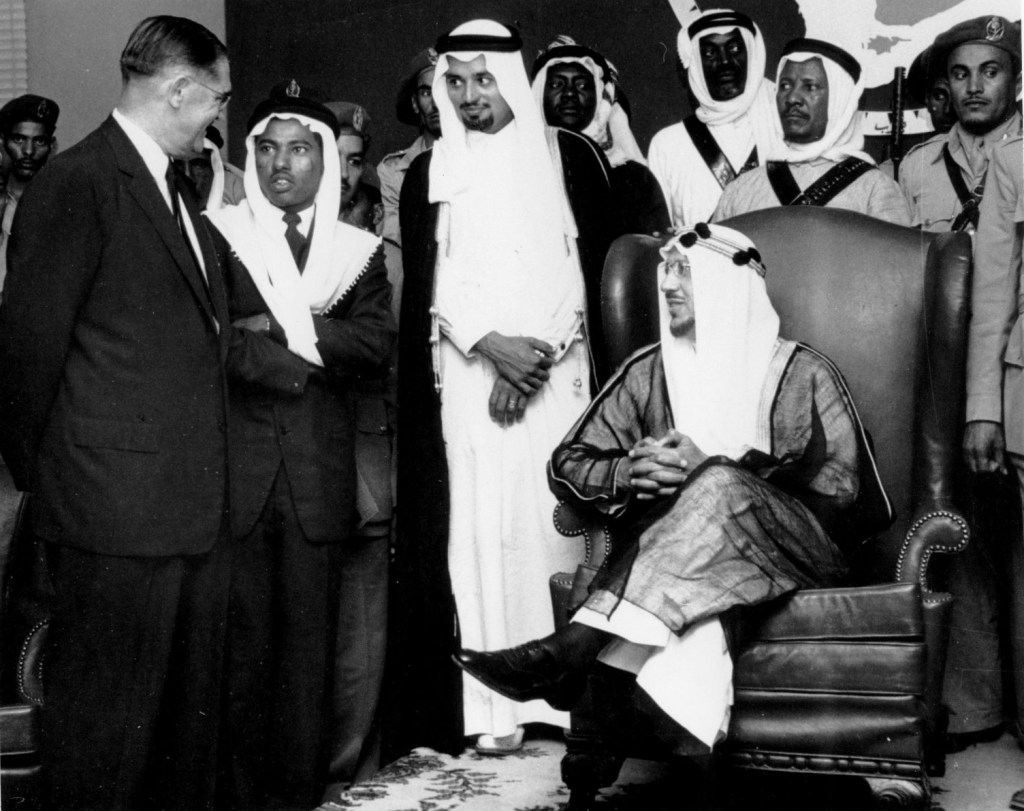
While the hunt for oil in Saudi Arabia is what brought the U.S. to the Middle East, there was a political reason why the Americans wanted to maintain their influence over the region: the Soviet Union. The Middle East was a significant front in the Cold War. As the Soviets tried to convince Arab countries to work towards communism, the United States wanted to keep any form of Soviet influence out of the Middle East.
Now, let’s move away from the Arabian Peninsula and farther east to Iran, where the United States has had a huge presence. Keep in mind, Iran is not a part of the Arab world; the Iranian people are ethnically Persian, not Arab (they speak Farsi, not Arabic). However, Iran is certainly a part of the Muslim world. But they are Shia Muslim, which is unique from the predominantly Sunni Muslim Arab world.
The U.S. government was alarmed when Mohammad Mosaddegh was democratically elected to become Prime Minister of Iran. The United States (and the United Kingdom) perceived Mosaddegh to be too friendly to the Soviet Union. They feared that Mosaddegh staying in power would pave the way to a potential communist takeover in Iran. Additionally, Mosaddegh nationalized the oil industry in Iran. Previously, the Anglo-Persian Oil Company (APOC) held exclusive rights to Iranian oil. But Mosaddegh’s move to nationalize Iranian oil was a huge blow to British interests. The United States and Great Britain believed that their position in the Cold War, as well as oil supply to the West, was in danger.
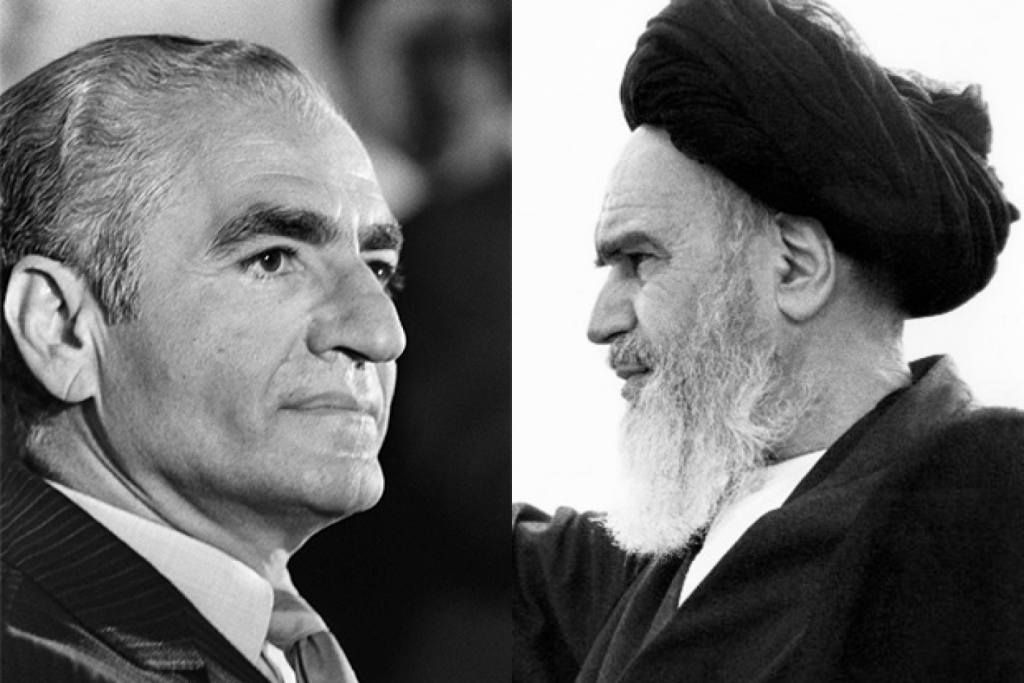
In 1953, the CIA, in coordination with the British government, orchestrated a coup d’état, in which democratically elected Prime Minister Mosaddegh was overthrown. The U.S. replaced the toppled ruler with Shah (King) Mohammad Reza Pahlavi, a secular, pro-Western dictator who was friendly to the West and hostile to the Soviet Union. The APOC tried to regain its old access to Iranian oil, but Iranian public opinion was so opposed that the new monarchy could not permit it. Iran under the Shah was characterized as a brutal police state that was one of the worst human rights abusers in the world. Perhaps I will devote a future article to the political history of Iran, as well as U.S. and Western foreign policy in the country.
I would like to explain this situation in American terms. Pretend that Iran is a global superpower with influence in every corner of the globe, while America is a much weaker country. The year is 2016. Donald J. Trump is elected President of the United States via the democratic, constitutional process. Suddenly, a foreign power comes in and kicks Trump out of the White House, replacing him with a brutal king who will serve Iranian interests. Wouldn’t the American people be outraged at this total violation of their sovereignty and political autonomy? Perhaps a greater understanding of political events could be achieved if we put ourselves in other people’s shoes.
It would be 26 years later in 1979 when Iran would experience another toppling of the government. This time, an internal popular revolution deposed the U.S.-backed Shah in what became known as the Iranian Revolution. It is referred to as the Islamic Revolution, since the brutal secular regime was overthrown and replaced by a new Islamic government, led by the Ayatollah (supreme religious and political leader of Iran). Ayatollah Ruhollah Khomeini instituted a religious government that was hostile to the West, particularly the interventionist policies of the United States. While the Ayatollah’s record as a political leader was far from perfect, it is understandable why he and the people of Iran (excluding the supporters of the Shah) would be antagonistic towards the Americans and the West in general.
Let’s move back to Saudi Arabia, the country where U.S. presence in the Middle East began. A young man named Osama bin Laden grew up to realize what he viewed as the horrors of American imperialism eroding the religious, cultural, and political traditions of his home region. He witnessed these developments in both his home country and in Iran. Dedicated to his faith of Islam, he hated to see such a strong U.S. presence in the Muslim world. Keep in mind, in no way was bin Laden picking a side in the Cold War: he was equally hostile towards the United States and the Soviet Union, seeing them both as foreign superpowers invading and intervening in the Middle East.
This prompted bin Laden to join the U.S.-backed Mujahideen forces in Afghanistan in 1979, a group of rebel Muslim guerillas fighting against the Soviet invasion of their country. Like Iran, Afghanistan is not a part of the Arab world; but it is certainly a part of the Muslim world, specifically the Sunni Muslim world. Bin Laden and the Mujahideen succeeded in their struggle, as the Soviet army withdrew from Afghanistan ten years later, after a long and brutal Soviet-Afghan War.
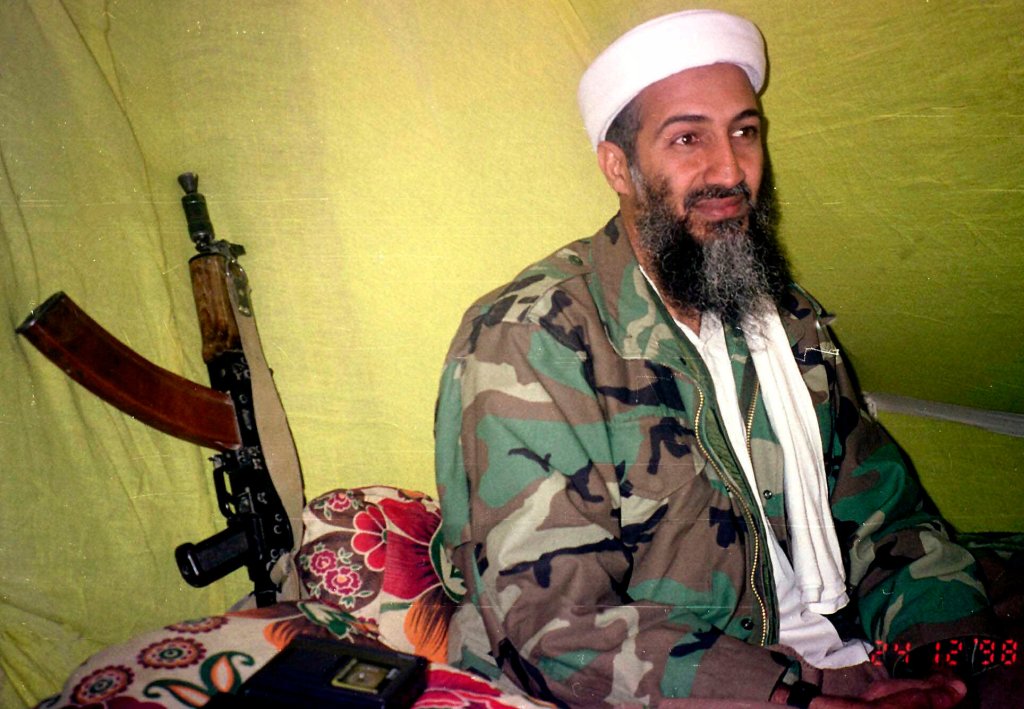
Bin Laden’s successful resistance in Afghanistan solidified his commitment to his cause, which is why he founded the infamous militant group Al-Qaeda. The stated mission of this group was protecting Islam and the Muslim world through terrorist attacks against invading superpowers, especially the United States. Iraq, led by the tyrant Saddam Hussein, invaded the small neighboring country of Kuwait in 1990. Hussein’s goal was to gain access to more lucrative oil supply, as well as port access to the Arabian Gulf. The Saudi royal family feared that their kingdom could be the next victim of Saddam Hussein’s invasion. The Saudi government rejected bin Laden and instead sided with the United States in fighting against Iraq. Bin Laden was convinced that the Saudi government would never support his jihad (holy war) against the United States’ interventionist policies in the Muslim world. When the U.S. invaded Iraq, they set up a huge number of military bases in Saudi Arabia. But the Americans never really left, symbolizing their permanent presence in the region. No one in the Middle East was more angry with this than Osama bin Laden.
These developments added fuel to the fire, motivating bin Laden to carry out the most horrific of terrorist operations against the United States, most infamously on September 11, 2001. In his 2002 “Letter to America,” bin Laden listed al-Qaeda’s motives for the September 11 attacks:
- Western support for attacks against Muslims in Somalia
- Supporting Russian atrocities against Muslims in Chechnya
- Supporting Indian oppression and maltreatment of Muslims in Kashmir
- Condoning the Sabra and Shatila massacres in Lebanon
- The presence of U.S. troops in Saudi Arabia, which housed two of the holiest sites in Islam (Mecca and Medina)
- U.S. support for Israel and its human rights violations against Palestinians
- Crippling sanctions against Iraq
From the warped perspective of bin Laden, 9/11, among other terrorist attacks, were justified offenses against a foreign invader who was destroying the way of life of the Muslim world and wreaking havoc on the politics of the Middle East. From the perspective of the Americans, 9/11 was a vicious attack on their country, fueled by radical Islamic terrorism and a hatred of the freedoms that define the American way of life.
Let me be clear: the actions of Osama bin Laden, al-Qaeda, and other terrorist groups are evil and unjustified, even if Muslims feel wronged by U.S. intervention in the Middle East. In my opinion, there are no innocent parties. But committing acts of terrorism against innocent civilians is a wicked act of cruelty that is fundamentally opposed to the teachings of Islam. My goal is to paint an accurate picture of what occurred before 9/11. Understanding this historically appropriate context will allow us to better grasp the contemporary relationship between the United States and the Middle East.
I want to take a step back from the detailed events of the Middle East and rewind to the beginning of Western presence in the region, starting with the Europeans. In my opinion, the Sykes-Picot Agreement is the most disastrous political document in the last 100 years. The British lied to the Arabs: they failed to grant the Arab world the sovereignty that they earned after the First World War. Sykes-Picot gave way to a chain of events that would destabilize the Middle East for the next century. As history has repeatedly shown us, imperialism and interventionism never have a good outcome for those being colonized and controlled. Whether we look at Africa, Latin America, or the Middle East, Western meddling with these regions has never had positive long-term consequences. As we have seen in the Middle East, the way that the Europeans carved up the region into separate states has left the Arab world weak and divided. The imposition of autocratic governments has resulted in corrupt rulers who are unwilling to allow any social progress or political change. The subsequent U.S. presence in the region only stirred up more resentment and turmoil, which has caused the Middle East to be unstable to this day.
Does this mean that the Arab world is blameless and has no internal improvements that can be made? Absolutely not. There is rampant corruption in Middle Eastern governments: the current systems are not conducive to political change and progress. As we saw in the Arab Spring in the early 2010s, the Arab people have grown tired of corrupt authoritarian governments and are yearning for more freedom and democracy. Many of the Arab governments were shameful in their response, as they brutally suppressed the demonstrations. Many of the leaders who were swept into power did nothing to help the people of their respective countries, nor did they contribute to any positive social change or political progress. Certain parts of the Middle East continue to be plagued with economic stagnation, internal division, civil wars, political corruption, and governmental resistance to democratic reform. The Arab world today is nowhere near the peak of Islamic civilization during the medieval period, a time when Muslim dynasties and empires were among the strongest on Earth.

But I find it critically important to not overlook the history of how Western interference has negatively impacted the Middle East. U.S. foreign policy shamelessly violated the sovereignty of the Middle East. However, one could argue that there were some bright spots, such as the downfall of Iraqi dictator Saddam Hussein. The Europeans, on the other hand, had absolutely nothing good to offer: their manipulation of the Arabs, as well as their division and colonization of the Arab world, have had lasting effects on the political landscape of the Middle East. The problems of the Arab world today stem back to the Sykes-Picot Agreement, which is why I believe it to be such a failure of a document. What would have happened if the British had kept their promise to the Arabs and granted them a united and independent Arab state? No imaginary boundaries, no occupation, no imposed regimes. I guarantee that the Middle East would be a much more stable and thriving region today. The region would have been far less vulnerable to American intervention, and there would be no need to solve many of the problems that we see today.
Europe and the United States are not the only ones to blame for the problems in the Middle East. But they are certainly at the root of many of the issues plaguing the region to this day. As oil has become less and less of a motivating factor for American presence in the Middle East, a variety of political factors has caused the region to become a fixture of U.S. foreign policy. A long, tortured history of Western occupation and interventionism has prevented the Arab and Muslim worlds from reaching the heights that it once did in previous centuries.
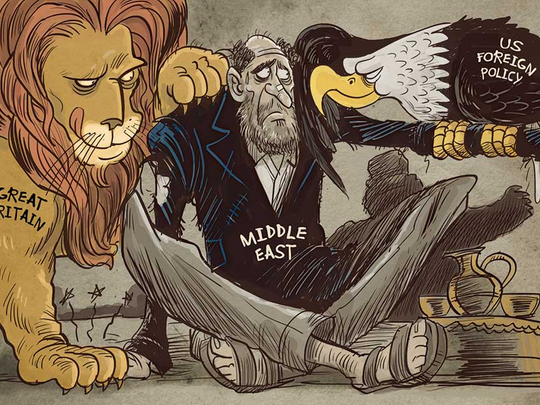
To answer the question in the title of this article, I argue that the Middle East has never been truly sovereign from Western presence, particularly after World War I. All of the Arab and Muslim countries in the region may be independent on paper; but this does not make them immune to the effects of a history of Western colonialism, influence, and intervention. Solving the issues of the Middle East is no easy task. But, at the very least, we must understand the root causes of such problems. A full grasp of the political and historical context affecting the Middle East is crucial to finding potential solutions.
This article focused on a general overview of Western presence in the Middle East, including European colonialism and occupation, as well as U.S. influence and intervention up until 9/11. In future articles, I will delve into more specific cases of U.S. interventionism, particularly the invasion of Iraq after the September 11 attacks.
 All Things Tennis and Politics