Western Presence in the Middle East: Have the Arab and Muslim Worlds Been Truly Sovereign?

Up until now, my politics articles have been centered on domestic American politics. However, I find it critically important that we do not reduce our analysis to within the borders of the United States. Due to the U.S. playing such an influential role on the global stage, we must critique how American foreign policy has impacted governments, nations, and peoples all over the world. While the U.S. has left its mark in nearly every corner of the globe, nowhere have the repercussions been more significant than in the Middle East. But some people forget the consequences of European imperialist policies in the region, which took place well before the Americans even looked in that direction.

We will go through a comprehensive overview of European and American foreign policies in the Middle East over the last century, examining how this Western presence helped shape the Arab and Muslim worlds today. To fully understand America’s role in the Middle East, we have to turn back the clock to the outbreak of World War I.

At this point in time, the Arabs (an ethnolinguistic group originating from the Arabian Peninsula) did not have a country of their own. There had previously been powerful Arab Muslim empires spanning the entire Middle East and North Africa, reaching as far east as Pakistan and as far west as Portugal. These empires were ruled by a string of caliphs, Muslim political and religious leaders who were regarded as successors to the Prophet Muhammad. The Islamic world was arguably the strongest polity of its time.

Let’s fast forward to 1914, the beginning of the First World War. The Arabs had been subjects of the Ottoman Empire for over six centuries, ruled by a Turkish sultan (Muslim ruler). While the Arabs and the Turks had a common religion (Sunni Islam), they were ethnically different, meaning that they were still considered to be different groups of people. Over time, the Arabs had grown tired of oppressive Turkish rule, which sparked the Arab nationalist movement and the Great Arab Revolt. Yearning for an independent state, the Arabs agreed to fight alongside the British against their common enemy, the Ottomans. In exchange for their alliance, the British promised the Arabs a united Arab state, free of Turkish or European control. Little did the Arabs know that they were being lied to by the British, and this betrayal would be the start of a series of devastating events for the Arab people.
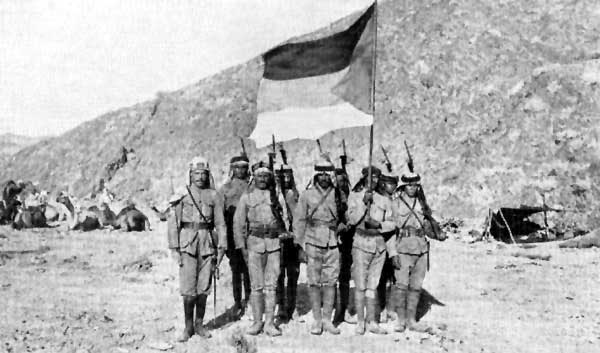
Shown above are Arab soldiers holding the flag of the Great Arab Revolt. The Arabs and the British struck a deal: the Arabs would fight against their Ottoman imperial rulers, and the British would grant the Arabs an independent state after the war. Many people do not realize how critical the Arabs were in securing Allied victory in the Middle East theater of the war.

To the shock of the Arabs, the Allied powers had secretly been planning to divide and colonize the Arab world after the fall of the Ottoman Empire. In what became known as the Sykes-Picot Agreement, the British and the French drew borders that would carve up the Middle East into separate Arab countries. These borders completely ignored local differences and aspirations, such as language, ethnicity, or regional identity. The British and the French imposed authoritarian regimes in each of these newly-fabricated Arab states, each with their own king that was sure to remain loyal to European colonial interests. All the while, the British and the French maintained their colonial control of the region, which completely violated the British agreement with the Arabs during the war. Unsurprisingly, this infuriated the Arab peoples living across the Middle East, especially the most passionate of Arab nationalists who were rightfully expecting a united and independent Arab state. Even after the British and the French left the region, the borders remained, and the Arab world has been divided in this way ever since.

Let me be clear: the eventual withdrawal of British and French troops from the Arab world did not wipe out their influence in any way. The political, economic, and cultural systems that had been imposed on the region maintained a firm grip over the societies of the several Arab countries. This continues to be the case today.

Now that we understand the Europeans’ role in shaping the political climate of the Middle East after the First World War, let’s analyze how the United States has played its part in transforming the region.

The devastation caused by World War I showed how much military warfare had changed. Battles were now fought with advanced technology and machinery that needed to be fueled by an extremely valuable commodity: oil. The U.S. realized that access to oil would determine which countries would be powerful. This motivated the Americans to turn East to see if they could find some of this oil that they coveted.

The American story in the Middle East started in the 1930s, when a company in California began its search for oil in the deserts of Saudi Arabia, one of the Arab kingdoms created by the Sykes-Picot Agreement. Despite the strong anti-Western sentiment among the Saudi people and the royal family, the Saudi government agreed to let the California company look for oil. The company succeeded in discovering vast amounts of oil all over the Arabian desert. Within the next few years, the Americans began setting up small cities around the oil operation, realizing the economic benefit that came out of the oil-rich region. The U.S. government convinced the Saudi royal family to allow them to build a military base around the oil operation. This was the first military base of many more to come.

There was a single reason why the Saudi royal family was willing to let the Americans establish their presence in the region: money. The oil industry had become an extremely lucrative business for the Saudi government, so they were willing to put aside their anti-Western attitude to bring about economic profit. However, the Saudi people were having none of it: they were totally opposed to a foreign, non-Muslim nation establishing entire societies on their land. To make matters worse, these communities were committing the most unholy deeds, such as drinking alcohol, a practice strictly forbidden in Islam. From the perspective of the Saudi people, this was not a friendly economic relationship with the Americans; it was a Western invasion of not only their sovereignty, but their way of life.
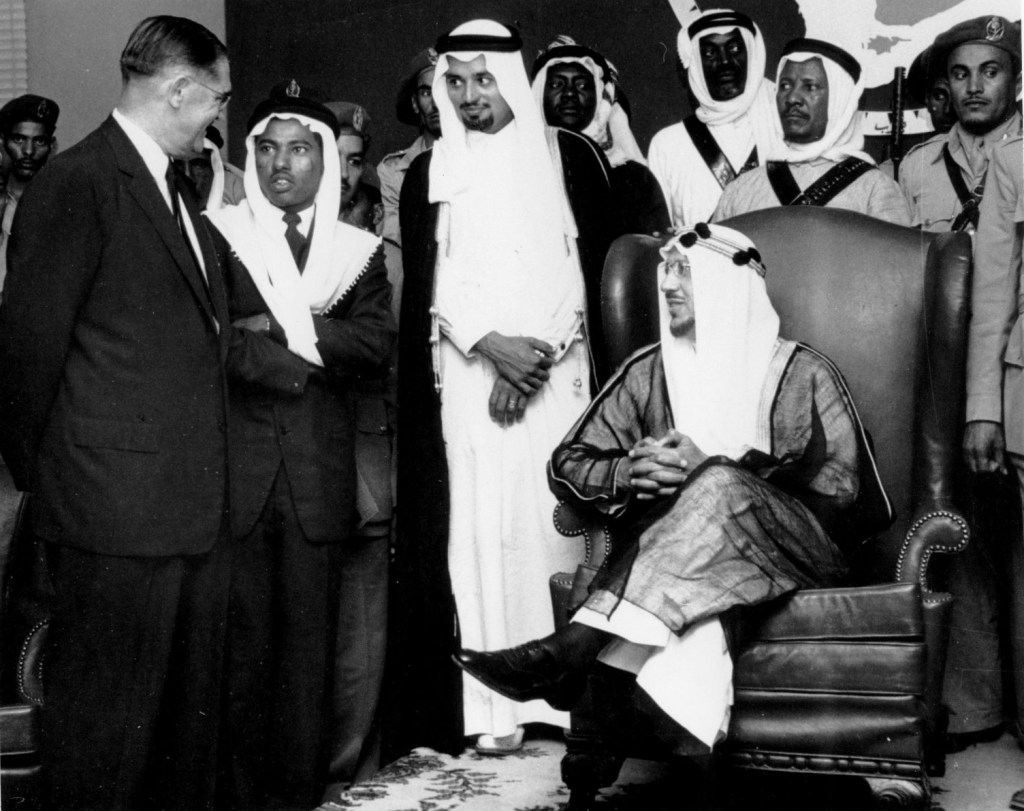
The United States managed to convince the House of Saud (the royal family of Saudi Arabia) to allow them to establish oil operations, American cities, and military bases in the Kingdom. As the Saudi government continued to get rich from the oil dealings, the U.S. gradually increased their presence in the region, angering the Saudi people. The economic relationship between the U.S. and Saudi Arabia slowly transformed into an American interest to control the region politically.

While the hunt for oil in Saudi Arabia is what brought the U.S. to the Middle East, there was a political reason why the Americans wanted to maintain their influence over the region: the Soviet Union. The Middle East was a significant front in the Cold War. As the Soviets tried to convince Arab countries to work towards communism, the United States wanted to keep any form of Soviet influence out of the Middle East.

Now, let’s move away from the Arabian Peninsula and farther east to Iran, where the United States has had a huge presence. Keep in mind, Iran is not a part of the Arab world; the Iranian people are ethnically Persian, not Arab (they speak Farsi, not Arabic). However, Iran is certainly a part of the Muslim world. But they are Shia Muslim, which is unique from the predominantly Sunni Muslim Arab world.

The U.S. government was alarmed when Mohammad Mosaddegh was democratically elected to become Prime Minister of Iran. The United States (and the United Kingdom) perceived Mosaddegh to be too friendly to the Soviet Union. They feared that Mosaddegh staying in power would pave the way to a potential communist takeover in Iran. Additionally, Mosaddegh nationalized the oil industry in Iran. Previously, the Anglo-Persian Oil Company (APOC) held exclusive rights to Iranian oil. But Mosaddegh’s move to nationalize Iranian oil was a huge blow to British interests. The United States and Great Britain believed that their position in the Cold War, as well as oil supply to the West, was in danger.

In 1953, the CIA, in coordination with the British government, orchestrated a coup d’état, in which democratically elected Prime Minister Mosaddegh was overthrown. The U.S. replaced the toppled ruler with Shah (King) Mohammad Reza Pahlavi, a secular, pro-Western dictator who was friendly to the West and hostile to the Soviet Union. The APOC tried to regain its old access to Iranian oil, but Iranian public opinion was so opposed that the new monarchy could not permit it. Iran under the Shah was characterized as a brutal police state that was one of the worst human rights abusers in the world. Perhaps I will devote a future article to the political history of Iran, as well as U.S. and Western foreign policy in the country.

I would like to explain this situation in American terms. Pretend that Iran is a global superpower with influence in every corner of the globe, while America is a much weaker country. The year is 2016. Donald J. Trump is elected President of the United States via the democratic, constitutional process. Suddenly, a foreign power comes in and kicks Trump out of the White House, replacing him with a brutal king who will serve Iranian interests. Wouldn’t the American people be outraged at this total violation of their sovereignty and political autonomy? Perhaps a greater understanding of political events could be achieved if we put ourselves in other people’s shoes.

It would be 26 years later in 1979 when Iran would experience another toppling of the government. This time, an internal popular revolution deposed the U.S.-backed Shah in what became known as the Iranian Revolution. It is referred to as the Islamic Revolution, since the brutal secular regime was overthrown and replaced by a new Islamic government, led by the Ayatollah (supreme religious and political leader of Iran). Ayatollah Ruhollah Khomeini instituted a religious government that was hostile to the West, particularly the interventionist policies of the United States. While the Ayatollah’s record as a political leader was far from perfect, it is understandable why he and the people of Iran (excluding the supporters of the Shah) would be antagonistic towards the Americans and the West in general.
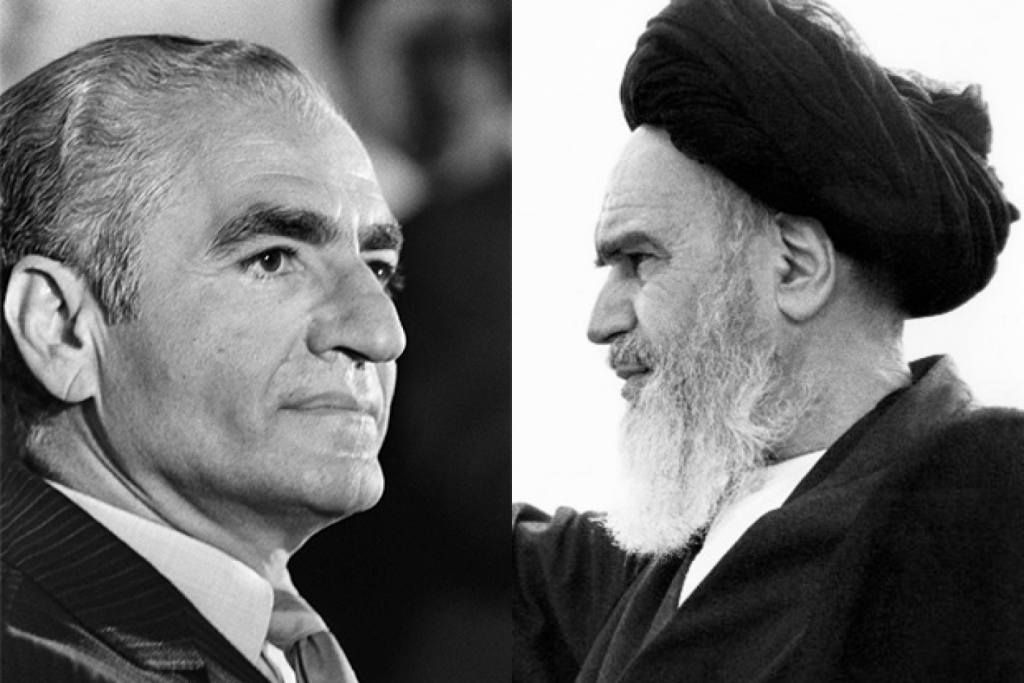
The Shah (left) and the Ayatollah (right) represented two opposing factions within Iranian politics and society. The Shah was a secular and modernist ruler, loved by the United States for his pro-Western policies. The Ayatollah was a religious leader who wanted to reinstate Islamic values in every aspect of Iranian society, pushing back against Western influence and domination. As you might expect, the U.S. government was not happy to witness the 1979 Iranian Revolution.

Let’s move back to Saudi Arabia, the country where U.S. presence in the Middle East began. A young man named Osama bin Laden grew up to realize what he viewed as the horrors of American imperialism eroding the religious, cultural, and political traditions of his home region. He witnessed these developments in both his home country and in Iran. Dedicated to his faith of Islam, he hated to see such a strong U.S. presence in the Muslim world. Keep in mind, in no way was bin Laden picking a side in the Cold War: he was equally hostile towards the United States and the Soviet Union, seeing them both as foreign superpowers invading and intervening in the Middle East.

This prompted bin Laden to join the U.S.-backed Mujahideen forces in Afghanistan in 1979, a group of rebel Muslim guerillas fighting against the Soviet invasion of their country. Like Iran, Afghanistan is not a part of the Arab world; but it is certainly a part of the Muslim world, specifically the Sunni Muslim world. Bin Laden and the Mujahideen succeeded in their struggle, as the Soviet army withdrew from Afghanistan ten years later, after a long and brutal Soviet-Afghan War.
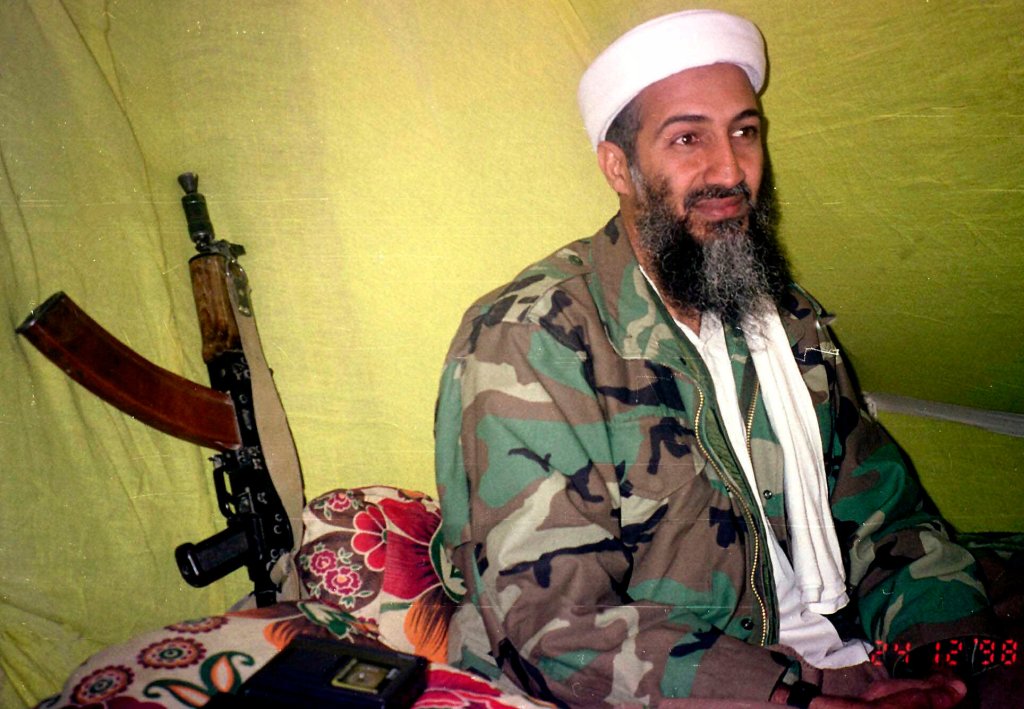
Osama bin Laden is arguably the most hated man in America. He proclaimed himself the embodiment of Muslim resistance to Western intervention, in the form of terrorist attacks against U.S. targets. The Saudi government despised bin Laden, seeing him as a threat to the economic friendship between the Kingdom and the United States. According to bin Laden, violence was a necessary form of resistance to protect the Middle East and Islam from a foreign attack on their religion, culture, and politics.

Bin Laden’s successful resistance in Afghanistan solidified his commitment to his cause, which is why he founded the infamous militant group Al-Qaeda. The stated mission of this group was protecting Islam and the Muslim world through terrorist attacks against invading superpowers, especially the United States. Iraq, led by the tyrant Saddam Hussein, invaded the small neighboring country of Kuwait in 1990. Hussein’s goal was to gain access to more lucrative oil supply, as well as port access to the Arabian Gulf. The Saudi royal family feared that their kingdom could be the next victim of Saddam Hussein’s invasion. The Saudi government rejected bin Laden and instead sided with the United States in fighting against Iraq. Bin Laden was convinced that the Saudi government would never support his jihad (holy war) against the United States’ interventionist policies in the Muslim world. When the U.S. invaded Iraq, they set up a huge number of military bases in Saudi Arabia. But the Americans never really left, symbolizing their permanent presence in the region. No one in the Middle East was more angry with this than Osama bin Laden.

These developments added fuel to the fire, motivating bin Laden to carry out the most horrific of terrorist operations against the United States, most infamously on September 11, 2001. In his 2002 “Letter to America,” bin Laden listed al-Qaeda’s motives for the September 11 attacks:

  • Western support for attacks against Muslims in Somalia
  • Supporting Russian atrocities against Muslims in Chechnya
  • Supporting Indian oppression and maltreatment of Muslims in Kashmir
  • Condoning the Sabra and Shatila massacres in Lebanon
  • The presence of U.S. troops in Saudi Arabia, which housed two of the holiest sites in Islam (Mecca and Medina)
  • U.S. support for Israel and its human rights violations against Palestinians
  • Crippling sanctions against Iraq

From the warped perspective of bin Laden, 9/11, among other terrorist attacks, were justified offenses against a foreign invader who was destroying the way of life of the Muslim world and wreaking havoc on the politics of the Middle East. From the perspective of the Americans, 9/11 was a vicious attack on their country, fueled by radical Islamic terrorism and a hatred of the freedoms that define the American way of life.

Let me be clear: the actions of Osama bin Laden, al-Qaeda, and other terrorist groups are evil and unjustified, even if Muslims feel wronged by U.S. intervention in the Middle East. In my opinion, there are no innocent parties. But committing acts of terrorism against innocent civilians is a wicked act of cruelty that is fundamentally opposed to the teachings of Islam. My goal is to paint an accurate picture of what occurred before 9/11. Understanding this historically appropriate context will allow us to better grasp the contemporary relationship between the United States and the Middle East.

I want to take a step back from the detailed events of the Middle East and rewind to the beginning of Western presence in the region, starting with the Europeans. In my opinion, the Sykes-Picot Agreement is the most disastrous political document in the last 100 years. The British lied to the Arabs: they failed to grant the Arab world the sovereignty that they earned after the First World War. Sykes-Picot gave way to a chain of events that would destabilize the Middle East for the next century. As history has repeatedly shown us, imperialism and interventionism never have a good outcome for those being colonized and controlled. Whether we look at Africa, Latin America, or the Middle East, Western meddling with these regions has never had positive long-term consequences. As we have seen in the Middle East, the way that the Europeans carved up the region into separate states has left the Arab world weak and divided. The imposition of autocratic governments has resulted in corrupt rulers who are unwilling to allow any social progress or political change. The subsequent U.S. presence in the region only stirred up more resentment and turmoil, which has caused the Middle East to be unstable to this day.

Does this mean that the Arab world is blameless and has no internal improvements that can be made? Absolutely not. There is rampant corruption in Middle Eastern governments: the current systems are not conducive to political change and progress. As we saw in the Arab Spring in the early 2010s, the Arab people have grown tired of corrupt authoritarian governments and are yearning for more freedom and democracy. Many of the Arab governments were shameful in their response, as they brutally suppressed the demonstrations. Many of the leaders who were swept into power did nothing to help the people of their respective countries, nor did they contribute to any positive social change or political progress. Certain parts of the Middle East continue to be plagued with economic stagnation, internal division, civil wars, political corruption, and governmental resistance to democratic reform. The Arab world today is nowhere near the peak of Islamic civilization during the medieval period, a time when Muslim dynasties and empires were among the strongest on Earth.

The Arab Spring was a series of anti-government uprisings that took place all across the Arab world. The main goal of these protests was to fight against corruption and authoritarianism and to bring about a new age of democracy and freedom. But we can connect these events to the Sykes-Picot Agreement back in 1916. We must ask ourselves: “Why were these autocratic states here in the first place? Why is the Arab world divided the way it is?” Understanding the answer to these questions adds a layer of complexity to the Middle East question.

But I find it critically important to not overlook the history of how Western interference has negatively impacted the Middle East. U.S. foreign policy shamelessly violated the sovereignty of the Middle East. However, one could argue that there were some bright spots, such as the downfall of Iraqi dictator Saddam Hussein. The Europeans, on the other hand, had absolutely nothing good to offer: their manipulation of the Arabs, as well as their division and colonization of the Arab world, have had lasting effects on the political landscape of the Middle East. The problems of the Arab world today stem back to the Sykes-Picot Agreement, which is why I believe it to be such a failure of a document. What would have happened if the British had kept their promise to the Arabs and granted them a united and independent Arab state? No imaginary boundaries, no occupation, no imposed regimes. I guarantee that the Middle East would be a much more stable and thriving region today. The region would have been far less vulnerable to American intervention, and there would be no need to solve many of the problems that we see today.

Europe and the United States are not the only ones to blame for the problems in the Middle East. But they are certainly at the root of many of the issues plaguing the region to this day. As oil has become less and less of a motivating factor for American presence in the Middle East, a variety of political factors has caused the region to become a fixture of U.S. foreign policy. A long, tortured history of Western occupation and interventionism has prevented the Arab and Muslim worlds from reaching the heights that it once did in previous centuries.
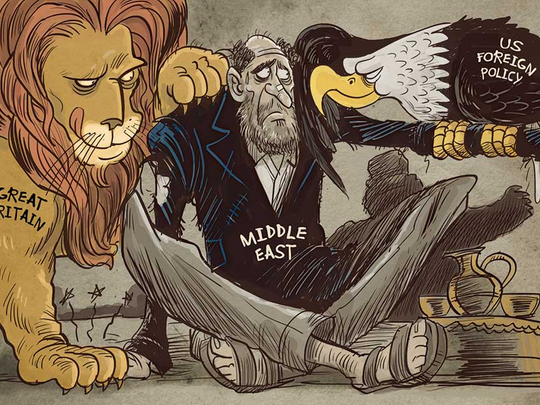
This political cartoon encapsulates how the Western world (mainly Great Britain and the United States) has been at the forefront of the root problems of the Middle East. Over the past century, the West has taken advantage of the Middle East in the form of political lies, encroachments on its sovereignty, and meddling in its affairs. This is not to say that the Middle East is a blameless victim; rather, I argue that the Middle East has been subject to unjust outside intervention that is fundamentally connected to the issues that the region faces today.

To answer the question in the title of this article, I argue that the Middle East has never been truly sovereign from Western presence, particularly after World War I. All of the Arab and Muslim countries in the region may be independent on paper; but this does not make them immune to the effects of a history of Western colonialism, influence, and intervention. Solving the issues of the Middle East is no easy task. But, at the very least, we must understand the root causes of such problems. A full grasp of the political and historical context affecting the Middle East is crucial to finding potential solutions.

This article focused on a general overview of Western presence in the Middle East, including European colonialism and occupation, as well as U.S. influence and intervention up until 9/11. In future articles, I will delve into more specific cases of U.S. interventionism, particularly the invasion of Iraq after the September 11 attacks.

Fear in Tennis: A Hindering Weakness, or a Powerful Weapon?

“Never say never. Because limits, like fears, are often just an illusion.”

These were the words of Michael Jordan in his Hall of Fame induction speech in 2009. Jordan’s words are relatively simple to understand; but this quote could mean different things to different people, depending on their situation. Based on my experience, these words accurately represent the battles that I face when I compete on the tennis court.

As we continue to unpack the most critical mental aspects of the game of tennis, we will now examine a universal psychological concept: fear.

Michael Jordan is the greatest basketball player of all time. People often point to his scoring titles, his dominance, his clutch moments, and his championship rings. However, many sports fans, particularly those who did not grow up watching Jordan play, think of him as this perfect player who always made the shot when his team needed it. But what many people do not realize is how imperfect of a player Michael Jordan really was.

Even though Jordan possessed unreal talent and scoring ability, these attributes were not necessarily what made him different from everyone else. So then, what made Jordan unique? Was it his 6-0 record in the NBA Finals with 6 Finals MVPs? In my opinion, not necessarily. Rather, I believe that his fearlessness set him apart from the competition. Jordan was so fearless that it made others fear him. There was no challenge that made him hesitant or worried about the consequences. If the game was on the line, and there was one man who needed to step up to take the shot, Michael Jordan would be the first in line.

Notice how I said “take” the shot, not “make” the shot. The idea that Michael Jordan made nearly every one of those difficult clutch shots is simply not true. Let’s take a look at his stats.

In the last 24 seconds of the game, Jordan was 9-18 from the field. In the last 10 seconds of the game, he was 5-11. Even though these are pretty great stats for such crucial shots, these numbers show that Jordan was nowhere near perfect. However, he had no fear when he took these shots. He did not let apprehension or fear of missing prevent him from taking the shot. We have all heard of Wayne Gretzky’s iconic quote: “You miss 100% of the shots you don’t take.” This perfectly sums up Jordan’s mentality.

Michael Jordan was a lion on the basketball court. He was the embodiment of what it meant for an athlete to take control of his fears and use them to his advantage. This was especially the case with clutch shots in the most crucial moments in games.

Certain themes apply to all sports, and fear is one of the most common among them. You cannot avoid fear, just like you cannot avoid having basic thoughts and emotions. Fear is natural, and when used properly, it can actually be a good thing. Gregg Popovich, one of the greatest coaches in NBA history, put it perfectly:

“Having an appropriate fear allows you to respect your opponent and know nothing is going to be easy.”

Popovich’s quote connects to what I have said previously in my blog. As an athlete, you must have a certain amount of nerves and fear, as they are necessary to motive you to play at peak performance. You cannot be overly confident or carefree, or you will risk having a poor performance. On the other hand, these nerves must be controlled: they cannot prevent you from playing freely. If nerves get out of control, they can handicap you from reaching your full potential.

All players want to win. But let’s take a closer look at what this desire to win can lead to. Ideally, a player’s desire to win causes them to play with tenacity, an intense hunger to compete, and a motivating force that pushes them past the finish line. But once again, too much of something good is not good. If a player has such an intense desire to win, they may obtain an unhealthy fear of losing. Rather than being excited to compete and to beat his opponent, all he cares about is to avoid losing at all costs.

This may sound confusing, so let me clarify. Winning and not losing are technically the same thing. But someone playing to win has a completely different approach from someone playing not to lose.

Someone playing to win has a mindset of passion and intensity, taking every opportunity to win points on his own terms. He plays with bravery and determination, not letting a fear of losing hinder his ability to play freely. On the other hand, someone playing not to lose does just the opposite. His fears prevent him from playing freely and courageously, hoping that he can win from his opponent’s mistakes.

From my own experience, the difference is crystal clear. It can be difficult to put into words, but playing to win rather than not to lose is truly a liberating feeling. Fear of losing is one of the most constraining feelings on the tennis court, which is why it can be detrimental if this fear is not properly managed.

Taking control of this fear has become a central part of my tennis journey. Every athlete has experienced certain points in their career where fear sometimes wins. Fear of failure can be a powerful force, but it can be overcome with disciplined training and a resolute mindset. Based on my experience, I believe that the best way to overcome a fear of failure is to gain confidence through repetition. If you do something enough times, as long as you do it the right way, you will gain enough confidence to overcome your fears.

I have made connections between the several mental aspects covered in the tennis articles of my blog. The conflict between confidence and self-doubt, between courage and fear, is the internal battle that the player must face. This is what makes the game of tennis mental warfare more than anything else. As long as the player is in control of his fears, rather than the other way around, fear can be the most powerful weapon wielded on the tennis court.

How Should We Look at Vaccine Mandates? A Nuanced Viewpoint on the Most Controversial Pandemic Policy

This is my second consecutive politics article on the topic of the COVID-19 pandemic. In my last politics article, I examined ideological approaches to pandemic policy, particularly how many conservatives have adopted libertarian stances in response to a perceived threat to their individual liberties. For today’s article, I will articulate my beliefs on certain pandemic policies, specifically regarding vaccine mandates. I highly recommend reading my last politics article before reading this one, as the previous one provides important context for this article.

The coronavirus (COVID-19) vaccine decreases the likelihood of contracting the virus, and it significantly reduces the chance of serious illness, hospitalization, and death. The science is clear: vaccines save lives. However, there has been a heated debate over whether the government has the authority to force the population to take the vaccine via mandate. While some argue that it is a necessary public health measure, others see vaccine mandates as a form of medical tyranny, depriving them of their right to make their own choices.

Many people do not realize that opinions on pandemic policy can be nuanced. They do not have to be so straightforward and one-dimensional. You do not have to either be a freedom-loving American who is careless about public health, or a pro-science person who wants to demolish people’s individual freedoms. Political polarization has been exacerbated by the pandemic, and it has caused people to believe that the other side is evil. The generalization typically sounds something like this: conservatives do not care about the lives of hundreds of thousands of people, while liberals are using the pandemic to justify tyranny and the destruction of people’s liberties. Our political discourse does not have to be this way. There is room for people in between, who desire a more balanced approach to pandemic policy. We must protect the safety of our citizens in a public health crisis; but we must not allow the government to recklessly annihilate people’s livelihoods.

Before we get into how I view vaccine mandates, let’s first define our terms: what does it mean to be “pro-vaccine”? Contrary to popular political labels, being pro-vaccine is more nuanced than many people realize. I interpret “pro-vaccine” as supporting the science behind the vaccine and believing that vaccination is in the best interest of individuals and society as a whole. This describes how I feel about the COVID-19 vaccine. I did my research on the vaccine, and I concluded that it was best for me, my family, and society if I got vaccinated, which is what I did in May of this year. I am pro-vaccine, meaning that I support as many people getting vaccinated as possible. But this does not mean that I support government mandates forcing people to get vaccinated. Let’s take a closer look at what I mean by this.

From a purely scientific perspective, I unequivocally support the vaccine. While there are still breakthrough cases in which vaccinated people contract the virus, it is extremely effective in keeping people out of the hospital and preventing serious illness or death. If it were up to me, I would encourage every person in the world to get vaccinated if they had the opportunity. Notice how I said “encourage.” This is an important detail that encapsulates my perspective on how vaccine policies should be implemented.

Take a look at these statistics from the state of Wisconsin. There is a drastic decrease in every category (cases, hospitalizations, and deaths) after receiving the COVID vaccine. While there is still a considerable amount of infections in vaccinated people, the chances of hospitalization and death are extremely slim. You can have your opinion about vaccine mandates; but there is no debate over the efficacy of the vaccine.

It has been proven that vaccines are an incredibly effective public health tool; but there is still a sociopolitical variable that we must take into account.

In a free country like the United States, people have the right to maintain a degree of bodily autonomy, particularly when it comes to drugs. Vaccines are a type of drug. Injecting a drug into your body should remain a personal medical choice, meaning that the government should stay out of it as much as possible. In this respect, there is a certain degree of freedom that must not be infringed upon by government mandates. I will discuss a few reasons why.

During the experimentation and approval process in developing a safe and effective vaccine, there are problems worth examining. Drug companies and the government are nowhere near perfect. Compared to the hundreds of millions of Americans taking the vaccine, the sample size of the testing and experimental phase was tiny. Thousands of people were used as test subjects for the vaccine, while hundreds of millions of people would be subject to a potential vaccine mandate(s). There is no feasible way to conduct a near-perfect testing phase for a vaccine or any type of drug. The small sample size is one of many flaws in the process of testing and approving a vaccine.

I am not arguing that the vaccine is not to be trusted. I believe that the benefits of everyone taking the vaccine are far greater than any potential costs. I also believe that there is a strong scientific basis for why this vaccine is effective, as I have made clear. However, that does not mean that I trust the process completely. It is far from perfect, and it never will be perfect. Vaccine companies (and all other drug companies) reserve a considerable portion of their profits for lawsuits dealing with cases of detrimental side effects. These drug companies understand that their product is never fully safe, which is why they are fully prepared to defend their product in a court of law. There have been FDA-approved drugs that were later taken off the market because they were no longer deemed safe. Am I saying that this will happen with the COVID-19 vaccine? Absolutely not. I trust the science that went into this vaccine, which is why I still support it. However, I also recognize that the system is inherently flawed, as there is simply no way to make it perfect. Since the system is not perfect, I argue that government mandates are a step too far.

This is a common argument made by those who are pro-vaccine but oppose government mandates: when there is risk, there must be choice. Until the system is perfect, there must not be government mandates forcing people to take a vaccine against their will. On top of that, the government should not be the only decision-maker when it comes to taking the vaccine. What if your doctor advises you not to take the vaccine due to your personal medical situation? One could argue that there could be exemptions, but who gets to decide whether an exemption is granted? Do we give that power to the government, as well? What if the exemption gets denied, even if you believe that there is a legitimate reason to not get vaccinated? There are simply too many messy situations that can result from government vaccine mandates.

Anti-vaccine and anti-mandate should not be used interchangeably, as they are politically distinct terms that do not belong in the same category. Someone who is anti-vaccine is against the vaccine itself, believing that it is either ineffective or dangerous. Someone who is anti-mandate is against the government forcing people to take the vaccine against their will. Being anti-mandate does not mean that you are anti-vaccine. But if you are anti-vaccine, you are most definitely opposed to vaccine mandates as well. You can be pro-vaccine but anti-mandate. Those who protest vaccine mandates, as pictured above, make a couple of common arguments: mandates violate bodily autonomy, and they are an illegal encroachment on the freedom that people have to make their own medical decisions.

I would be totally fine with the government encouraging and endorsing the vaccine; in fact, I believe that the government has a responsibility to do this. But I do not support the government forcing private businesses to mandate vaccines for their employees. This is a common tactic that governments use to mandate vaccines. Technically, it is the business that is mandating vaccines for their workers; but in reality, it is the government that is in total control of the situation. I am opposed to this kind of government coercion, as I believe that it is an illegal encroachment of the government onto the private sector. This carries right into my next argument.

My philosophy with vaccine mandates is that the public and private sectors should remain separate and independent, similar to how the branches of government work. If a private business requires their workers to get the COVID-19 vaccine, then I would support the right of that business to protect the health and safety of its workers and customers. The same would apply to a private educational institution. If a private school or university required that all students, teachers, and staff get vaccinated, then I would support their right to protect the well-being of the school’s public health. Keep in mind, you do not have the God-given right to attend a school like Harvard University, for example. If Harvard decides that getting the COVID-19 vaccine is a prerequisite for attending their university, then you must comply with their rules. At the end of the day, you are not required by law to get the vaccine if you do not want to; you simply will not get the privilege of attending Harvard.

Those who are against vaccine mandates view vaccination cards as a symbol of medical tyranny. They argue that it is a blatant violation of individual freedom and that they should not be required to show proof of vaccination to go about their daily lives. If the government required a vaccination card, I would be against it. But if a private business required this proof of vaccination, then I would support that business’ right to do so.

Some people are more strongly against vaccine mandates than I am. These people are against mandates in both the public and private sectors. They argue that vaccine mandates in private businesses still infringe on people’s bodily autonomy and right to make their own medical choices. However, I maintain that a business has the right to make decisions that are in the best interest of the company. For example, businesses want to prevent COVID outbreaks in the workplace, since they want to avoid employees and customers getting sick. So if a private business makes their own mandate for a COVID vaccine, then I would support their right to do so. Those who oppose private mandates argue that it is a violation of civil rights and equal protection. They claim that denying a job or service to someone based on vaccination status is equivalent to discriminating against their race or religion. However, I have a major problem with this reasoning.

Race, religion, or any other identifying characteristic is not a valid reason to deny someone service or employment. If an employer says that a black man working in his business is a “threat to the safety of the business,” that would be a totally ridiculous and discriminatory reason to fire that worker. Comparing race to vaccination status is a huge leap in logic. They simply do not belong in the same category. Being unvaccinated can be a legitimate threat to public health; being part of a racial group or any other identity group is not a societal threat. Therefore, I believe that a private business can make the decision to mandate vaccines for all workers and customers. I also believe that it is unfair to make a comparison between vaccine mandates and discrimination based on race.

I would also like to push back on those who support government vaccine mandates. A common argument is that your freedom of choice ends when that choice impacts others. Being unvaccinated can harm those around you, meaning that you no longer have the unrestricted freedom to choose whether to get the vaccine. They often compare vaccine mandates to drunk driving laws: the government can mandate vaccines to protect public health, just like the government passes laws against drunk driving to keep the public safe. But there are some problems with this logic. Not allowing someone to do something is different from forcing them to do something against their will. If that sounds confusing, let me clarify: requiring someone to get vaccinated is not comparable to requiring them to refrain from doing something (in this case, drunk driving). It is fine for the government to pass laws that prohibit people from doing dangerous things, such as walking into schools with a gun, or driving on the highway while being heavily intoxicated. However, it becomes problematic when the government is forcing you to take a vaccine that you may be hesitant about.

As I mentioned earlier, my number one concern with the issue of mandatory vaccination status is the independence of the private sector from the public sector. As I have said before, I am against the government forcing private businesses to mandate vaccines. But I am also opposed to the government prohibiting those same businesses from mandating vaccines. For example, I would oppose a governor passing an executive order requiring all private businesses to not have vaccine mandates. I believe this to be an illegal encroachment of the government onto the freedom of businesses. These businesses have the right to decide what is in the best health interest of their work environment.

A long list of businesses and companies have taken steps to mandate vaccines for their employees. This bars them from working unless they show proof that they have been inoculated against COVID-19. These companies argue that mandating vaccines is not a new idea, as they have mandated vaccines for other diseases and viruses, as well. It is important to note that these businesses have mandated vaccines for their employees on their own. They have decided to impose these mandates, not the government.

The question of vaccine mandates has been at the forefront of the political division that has characterized this pandemic. This debate ties into the conflict between freedom and order (more on this in my previous politics article). In this case, freedom refers to the right of citizens to decide whether or not they want to take the COVID-19 vaccine. On the other hand, order refers to the safety of the community in a public health crisis. It seems as if the pre-pandemic political division prepared us for the political polarization that the COVID-19 vaccine has caused. However, having a nuanced viewpoint on this controversial pandemic policy is a step toward finding some common ground.

Motivation in Tennis: Where Does it Come From, and How Do You Know if You Have Enough of It?

Tennis can be a grueling sport. People who do not understand tennis (or sports in general) think that a sport must involve physical contact between players for it to be considered “tough.” Nothing could be further from the truth. Based on my experience, tennis presents many obstacles that test the mental fortitude and willpower of the player.

As we continue to explore the various mental aspects of the game, in this article, we will take a closer look at a crucial component of tennis: motivation.

Some of what I am about to say can be applied to other sports as well, not just tennis. However, there are many elements that apply specifically to tennis, which is why I am talking about motivation in tennis, not motivation in all sports. 

What motivates a tennis player? Mainly three things: the desire to win, the love of competition, and the love of the game. These three forces work together to drive a tennis player to continue working hard on the court and wanting to compete at the highest level. This applies to all athletes, not just tennis players.

Think about how much effort goes into being a tennis player, particularly as a student-athlete. A tennis career is filled with hard work, discipline, and sacrifice: arduous training sessions, strenuous hours of fitness, and overcoming mental hurdles. But it all proves to be worth it, as long as you have the motivation to do so.

The problem with understanding motivation is that it can be difficult to quantify. How do you know if you are truly motivated as a tennis player? How do you know how much motivation you have? Are there levels of motivation? These are difficult questions to answer, but we can start by understanding how motivation works and manifests itself in a tennis player.

Motivation involves a series of ebbs and flows. These fluctuations happen on their own, even when the player does not intend for them to happen. In fact, there are times when the player wants to be motivated, but for some reason, they cannot seem to find the spark that will get them there. I have spent a lot of time thinking about this question: what causes tennis players to have dips in motivation?

As I mentioned in my first tennis article, one thing that makes tennis unique is that there is no real offseason. “The grind never stops” applies perfectly to the game of tennis. Other than a small two- or three-day vacation here and there, you essentially spend all 52 weeks of the year on the tennis court. This can be physically exhausting; but more significantly, it can take a toll on the mental capacity of the player. It is not easy playing a difficult sport with hardly any time off, which is why tennis players experience occasional decreases in drive.

There are a few different ways that you can sense a drop-off in motivation. Perhaps you wake up in the morning and feel subconsciously bothered that you have to go to another tough practice. Maybe you do not feel quite the same enthusiasm when you are on the court. This can take the form of less intensity, getting mentally tired too easily, feeling a bit too excited for practice to be over, or feeling more nervous to compete than usual.

While all of these examples have a negative connotation (as they should), I find it hard to believe that this has not happened to every tennis player. I am not saying that when this happens, it means that the player’s motivation is gone completely. In fact, it is quite the opposite. Even the most dedicated players can have slumps in motivation in the form of the examples that I described above. These examples have happened to me personally, and they can be difficult to control. In my opinion, it is okay if these things happen occasionally, as long as you manage to recover in a swift manner. In my tennis career, I have had instances of decreased motivation, as every athlete has had at some point in their career. But I am happy to say that I have always bounced back with an adequate level of motivation to continue playing the sport that I love with true joy and excitement.

I would like to bring up a professional tennis player to whom this topic applies perfectly: Novak Djokovic. Everyone knows that Djokovic is one of the greatest tennis players of all time. He has been at the top of the game for over a decade. He has had years where he seemed unstoppable, especially in 2011, 2015, and 2021. If you watched Djokovic play in these three years in particular, you could see the fire in his eyes. Nothing was going to get in the way of accomplishing his goals. His motivation was at an all-time high.

But people tend to forget some of the lower parts of Djokovic’s career, in which he struggled to compete in the way that the tennis world has grown accustomed to. He got off to an incredible start in 2016, winning both the Australian Open and his first Roland Garros title. However, out of nowhere, he lost to Sam Querrey in the third round of Wimbledon. The tennis world was shocked. He managed to get to the US Open final later that year (thanks in part to several walkovers), but he lost to Stan Wawrinka in four sets. Even though Djokovic got to the final of the US Open, something seemed off. He had lost several matches that year, including a devastating first round loss at the Olympics against Juan Martin del Potro. He also had a string of uncharacteristic losses at multiple Masters 1000 events. But the worst was yet to come.

Djokovic really struggled in the 2017 season, highlighted by a shocking second round loss in the Australian Open, followed by a slew of bad losses in Masters 1000 and Masters 500 tournaments. He retired during a Wimbledon quarterfinal match due to an elbow injury, which would go on to keep him on the sidelines for the rest of the season. Djokovic ended the season injured and with no Grand Slam. By his standards, 2017 was a miserable year.

But we must look beyond Djokovic’s poor results. From what I saw, he did not seem like his usual self. He seemed tired, unsure of himself, low in confidence, and most importantly, lacking in motivation. He did not seem to have the same desire to win like he had throughout his career, particularly in his unstoppable years of 2011 and 2015.

2017 was arguably Djokovic’s worst year. Zero Grand Slam trophies, a batch of bad losses, and a season-ending injury showed that Djokovic had become a shell of himself, at least for that year. Djokovic said himself that even though he had no problem getting motivated for training sessions on the practice court, he struggled to find the necessary drive to compete at the highest level in tournaments.

Djokovic’s sudden loss of motivation is evidence for what I have said earlier: motivation has random fluctuations, and sometimes there is no logical explanation. Perhaps he got burned out, both physically and mentally. However, what I think is more important is how he managed to bounce back.

As we all know, Djokovic made an incredible comeback for his career, as he worked his way back to the top of the game, culminating in a Wimbledon victory in 2018. This was his first Grand Slam trophy in over two years. Djokovic was back. He continued to win multiple Grand Slams throughout the next few years, highlighted by his 2021 season, which was arguably the single most dominant season in the history of tennis. He fell one win short of the calendar Grand Slam, which would have been a truly remarkable accomplishment. His 2021 season was an unreal achievement. But the main thing that I noticed was how motivated he looked. It was like his 2011 and 2015 seasons on steroids. You could see the look in his eyes: nothing would stop him from accomplishing great things, and that was exactly what he did. Even though I am not a huge Djokovic fan, I have to give credit where credit is due. I learned something valuable from it as well: even when there are times when you are lacking in motivation, it is never too late to find that fire and get back on track. The palpable difference between Djokovic’s 2017 and 2021 seasons are proof of just that.

Djokovic has put together a historic season in 2021. Even though he has played relatively few matches in comparison to previous seasons, he currently holds a very strong 44-6 record. What has been most impressive is his performance on the biggest stage in Grand Slams: three trophies (Australian Open, Roland Garros, and Wimbledon) and an astounding 27-1 record. Djokovic’s performance on the Grand Slam stadium courts, as well as his willingness to win at all costs can be boiled down to one thing: motivation.

A Stable System or an Inhibiting Barrier? Pros and Cons of the Two-Party System, and a Possible Solution

“The alternate domination of one faction over another, sharpened by the spirit of revenge natural to party dissension … is itself a frightful despotism.”

-George Washington, Farewell Address, 1796

The Founding Era saw a nascent United States trying to find its path as a new nation. Even though the newborn country had a lot to celebrate for its successful war of independence against the British, there were a plethora of issues that needed to be worked out if the nation were to survive. One of the most important questions that loomed over the young nation was the future of political factions and parties, and the extent to which they would harm the country. (Spoiler: they harmed the country, a lot.)

Let’s be honest: even though George Washington meant well with his message on political parties, it was a bit unrealistic to expect that the nation would not eventually divide itself into rival factions. Virtually every country in the world has a political system that is defined by its division into parties with competing interests and agendas. However, unlike some other countries in the world (but similar to others), the politics of the United States is dominated by a two-party system.

The United States has been through a rollercoaster of different political parties at the national level. I could write a detailed article on the history of American political parties since its founding. However, that is not my goal. The purpose of this article is to explain the history of our modern two-party system and how it shapes American politics today.

The Republican Party was founded on March 20, 1854. It was created by a faction of former Whigs who held moderate anti-slavery positions. Ever since, the American political system, particularly at the national level, has been defined by its rivalry between two main political parties: the Democrats and the Republicans.

The founding of the Republican Party in 1854 marked the beginning of what has come to define American politics today. Ever since, the U.S. government has been dominated by the two-party system, as the rivalry between the Democrats and the Republicans has become an integral part of the electoral and lawmaking processes.

Amidst the political chaos and division that we find ourselves in today, we must understand the structure of our political system and how it affects elections and policymaking. Before we get into the pros and cons of the two-party system in America, we must first define the most basic of our terms: what is a political party?

In Federalist No. 10, James Madison argued that “liberty is to faction what air is to fire.” In a free republic like the United States, factions are inevitable. These factions take the form of several groups of people in a society that have their own ideologies, impulses, desires, and goals. As long as people are able to think freely, political factions will arise. A political party, on the other hand, is a more formal organization that seeks to capture power through elections, with the ultimate goal of getting policy agendas passed through the government. Throughout U.S. history, different political parties have wrestled for control of the government. This trend continues today with the political deadlock between Democrats and Republicans.

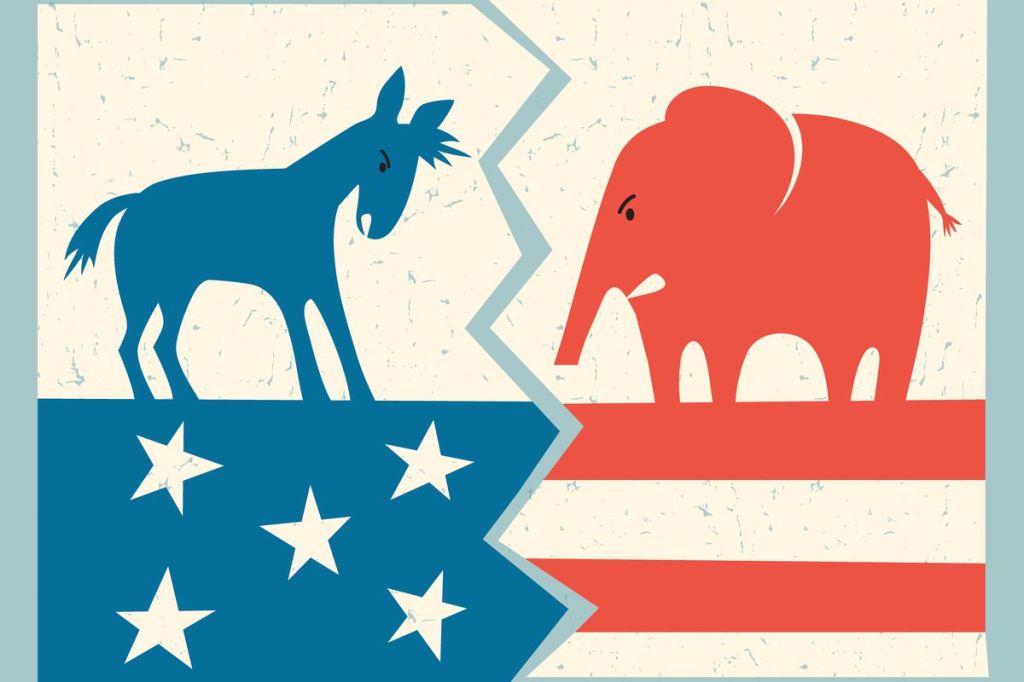
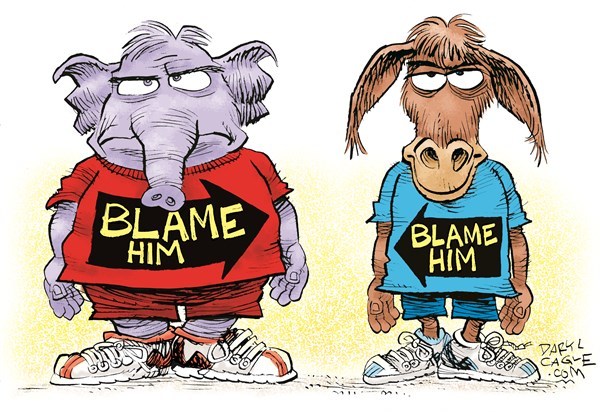
The conflict between Democrats and Republicans in Congress has fueled resentment and frustration among the American people. Many Americans feel like their elected officials spend far more time fighting and playing party politics than passing meaningful legislation that would benefit the public. Partisan rivalry has been a fundamental part of our two-party system.

The “winner take all” system in the Electoral College plays a major role in upholding the two-party system. Since it is nearly impossible for a third party candidate to win the state-wide popular vote, either a Democratic or Republican candidate will always win the state. Not only does this discourage third party candidates from running, but it also incentivizes voters to elect either Democrats or Republicans, as they know that these are the only two candidates who have any real shot at winning. 

The situation we find ourselves in today raises a pressing question: is the two-party system conducive to a healthy democracy?

If you have read my previous politics articles, you will see that I value looking at all issues from different perspectives. I find this to be a critical part of approaching political questions in a nuanced and objective way. The topic of this article is no different. Let’s examine the pros and cons of the two-party system in U.S. politics, starting with some of the most common arguments in favor of the two-party system.

Political information is much easier to understand in the context of two rivaling parties. Politics would become unnecessarily complicated if we were to have several parties that each held slightly different interests. Essentially, the two-party system simplifies politics and brings the country’s chaotic atmosphere into a clean-cut system of two main parties representing two general factions that represent varying interests. Each party can effectively and conveniently present their broad political philosophy, making the political process easier and more digestible for voters.

In a two-party system, parties must accommodate the needs of a wide variety of voters, which is what we see today with Democrats and Republicans. For example, the Republican Party appeals to many different kinds of conservative voters, such as Evangelical Christians, pro-life activists, gun rights advocates, and those who are generally in favor of lower taxes, business interests, individual freedom, and smaller government. In a multi-party system, each party would only need to meet the demands of a small fraction of society. Meanwhile, in a two-party system, each party needs to appeal to a wide range of voters, forcing each party to be more complete by encompassing many different interests.

Having two dominant parties prevents extremism from gaining ground in the government. The government is generally stable when being run by two parties, as fringe candidates are unable to gain any meaningful control in Congress. Each of the two parties must hover around the center of the political spectrum, where the Democrats are moderately left-wing and the Republicans are moderately right-wing. The far left and the far right can be dangerous for the stability of democracy, which is why the two-party system acts as a shield against this threat.

Pictured above are protestors who identify with a political movement known as Antifa, a far-left group that claims to fight against all forms of fascism, racism, and far-right extremism. Even though their number one enemy is the right wing (especially the alt-right), Antifa is also opposed to moderate and centrist politics. Many people who associate with Antifa see almost no difference between the moderate views of mainstream Democrats and Republicans. The two-party system prevents groups like Antifa from gaining any serious ground in the government, to the delight of conservatives and Republicans.

Even in times of intense political division and polarization, power in the government cannot dramatically sway between extremist parties on opposite sides of the political spectrum. Overall, the political situation can be kept under control, fostering greater stability than can be kept in a multi-party system.

Lastly, the two-party system allows for compromise to be reached in a much easier fashion. Let’s say that Congress and the president are trying to get a bill passed, but they are struggling to reach the threshold of a majority. All that the Congresspeople have to do is compromise with a few members of the opposing party, and perhaps with some members within their own party. In a multi-party system, reaching a majority in Congress would oftentimes be extremely difficult, possibly requiring complex compromises filled with awkward coalition-building. Finding middle ground in Congress is much more efficient in a two-party system, meaning that it is easier to get legislation passed in this manner than with multiple parties.

While these are certainly decent arguments, it is clear that the two-party system in American politics has its drawbacks. These flaws become obvious if you look at some of the impacts they have on our political system as a whole.

The most obvious failure of the two-party system is that it gives limited options for voters, who are ultimately forced to pick between a Democratic and a Republican candidate, even if they would rather choose someone from a different party. Voters know that there is no point in voting for a third party candidate because they have no chance of winning. This is especially the case in the presidential election with the system of the Electoral College.

In a politically diverse country like the United States, the two-party system does not do voters justice. There is no way that you could accurately reflect the diverse opinions, ideologies, and agendas of American voters with just two political parties. A multi-party system would much more effectively take into account the many nuances in political opinion across the country. Let’s look at the left wing as an example. It is characterized by a wide variety of political affiliations, including anarcho-communists, radical socialists, progressives, moderate liberals, and centrists. For instance, socialists and progressives often do not see eye to eye with centrists. Why should they all feel the need to subscribe to the Democratic Party?

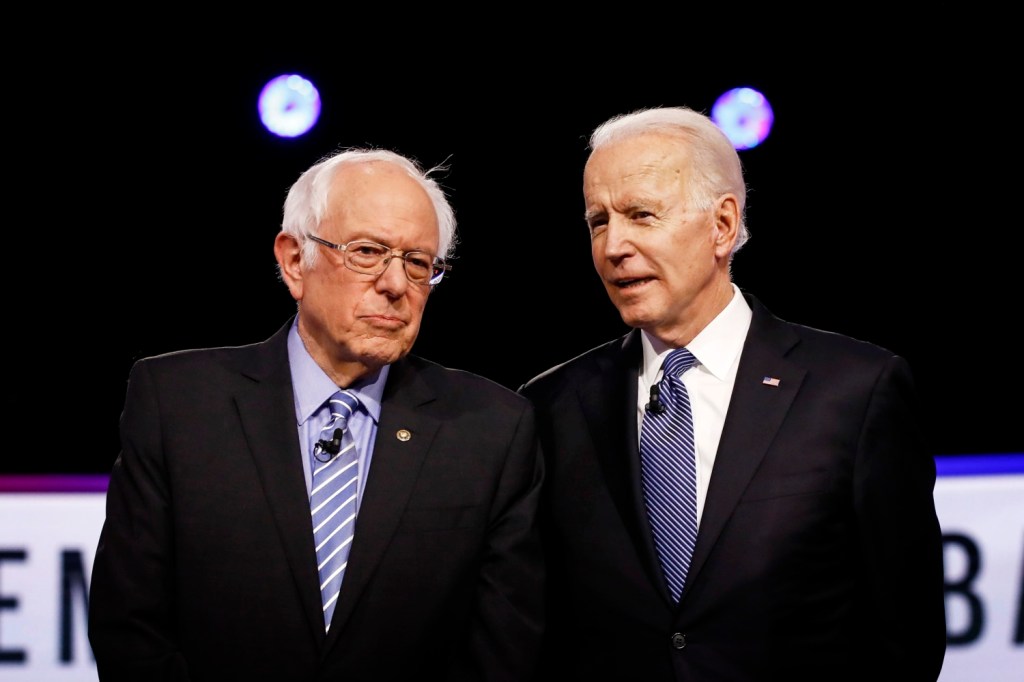
Free college, student debt cancellation, universal health care, and the Green New Deal are a few of the progressive policies that Bernie Sanders advocates. Joe Biden, a moderate Democrat, does not support any of these measures. So, why did they both run for president in 2020 as Democrats despite these fundamental differences? As one of just two Independents in the Senate, Sanders argues that Americans are against the two-party system and that it is time to get rid of it. He also said that despite his objections to the moderate wing of the Democratic Party, he had no choice but to run for president as a Democrat because that is the only way that any candidate can win under the two-party system.

Not only does the two-party system cause problems for voters, but it also forces candidates to conform to a single party when they would rather associate with a party that is less moderate. For example, in a multi-party system, the progressive members of the Democratic Party would likely form their own Progressive Party, which would more accurately reflect the differences that they have with the moderate wing of the Democrats. But with the two-party system having a stranglehold on the government, progressives and moderate liberals are forced to be part of the same Democratic Party.

One of the most detrimental effects of the two-party system is that alternative voices are often ignored: “radical” ideas are suppressed in order to maintain the moderate status quo. Typically with the two-party system, only moderate and centrist ideas are tolerated at the government level, while “fringe” ideas are struck down as “dangerous.” This prevents critical progress from being made on the national level. But again, this could be seen as both a positive or a negative, depending on your perspective. Some people view slow and deliberate change as a way to maintain political stability while making progress in a controlled and gradual manner. However, others who are more progressive-minded see the “political stability” argument as a weak excuse to prevent meaningful change from happening. In short, a two-party system breeds political stability but restricts progress. A multi-party system allows for more progress but risks political stability.

The question of the two-party system in America is not so much a partisan issue as it is an ideological one (“partisanship” in the American context assumes the Democratic-Republican divide that has resulted from the two-party system). That may sound a bit vague, so let me explain further.

Those who are on the far right and the far left tend to be against the two-party system. For simplicity, let’s call these people “radicals.” As mentioned before, the two-party system is structured in a way that protects politics from reaching the fringes of the political spectrum, meaning that both parties tend to pursue relatively moderate agendas. That is why both the radical left and the radical right tend to be skeptical of both Democrats and Republicans because they are too moderate for their liking. The Democrats are not far-left enough for Antifa, and the Republicans are not far-right enough for the alt-right. On the other hand, moderates tend to support the two-party system for its ability to keep politics close to the center of the political spectrum, not swaying too far right or too far left. A change in the party system may be too radical of a change for many moderates to accept.

The 2020 presidential election reawakened many Americans’ frustrations with the current structure of party politics. A huge number of liberals felt like they only voted for Joe Biden because they were forced to pick “the lesser of two evils.” In fact, many liberals (particularly progressives and leftists) strongly dislike Biden; but they felt like he was tolerable compared to former president Donald Trump, especially since they were so eager to get Trump out of the White House. Perhaps a reformed Electoral College and a multi-party system would allow voters the chance to pick candidates who they truly support rather than picking the “less bad” candidate.

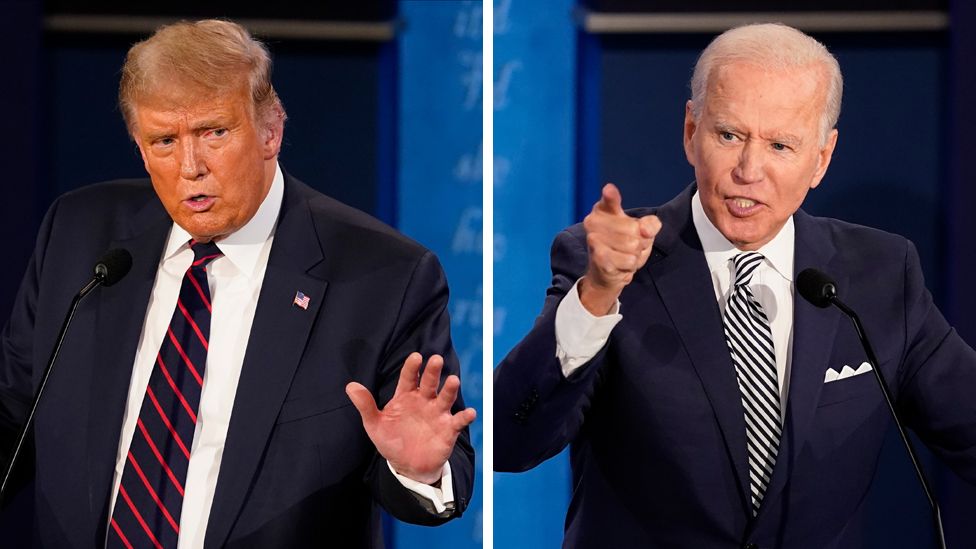
Joe Biden defeated Donald Trump in the 2020 United States presidential election, garnering 81.2 million votes nationwide. This was the first time in U.S. history that a presidential candidate received more than 80 million votes. Ironically, enthusiasm for Biden is not what got him a record number of votes; rather, nearly everyone on the left wing (moderate liberals, progressives, leftists, and socialists) were so eager to get Trump out of office that they were willing to “settle for Biden” to achieve this aim. Because of the two-party system, those on the left voted against Trump, not for Biden.

Since I am a moderate, one might think that I support the continuation of the two-party system, given my previous argument about moderates. However, I believe that there are too many drawbacks to the two-party system for me to tolerate. If you have read my previous politics articles, you would know that I love finding middle ground on the most contentious political issues. This situation is no different. Perhaps we can reach a compromise that allows for a more diverse set of political parties, but in a way that protects against the dangers of a multi-party system.

I propose that we allow a multi-party system but prevent an excessive number of parties from joining the government. Perhaps four parties (and no more) in Congress would be ideal, including a party for moderate Republicans, a party for far-right conservatives, a party for moderate Democrats, and a party for progressive liberals and leftists. In addition, a reformed Electoral College (read my article on the Electoral College here) could open the presidential election to candidates of a few other parties: this would allow those running to have a reasonable chance to compete against their more established Democratic and Republican opponents.

The Cycle of Confidence: What is Confidence, and How Does it Impact Performance?

Someone once told me that “tennis is only 20% physical, the rest is all mental.” Honestly, I disagree with this statement, and here’s why: based on what I have learned from playing tennis for a decade and a half, there is no way of separating the physical from the mental. The physical and mental aspects of the game are certainly unique from one another, but they cannot be put into separate, independent categories. We must understand the interaction between the physical and the mental, as well as the effects that they have on one other, in order to fully grasp the experience of a tennis player.

The complexity of the brain is what makes humans such advanced organisms. A significant feature of the brain that defines human behavior is the effect that past experiences have on how we act in the present. Everything that we do is connected. In a sense, how we behave is a physical manifestation of what goes on in our brain, and every action that we take is heavily influenced by our brain activity. This basic psychological idea is highly applicable to sports performance. In my opinion, not only does the mental game play an important role in performance; it dictates it. Nowhere is this more clear than in a phenomenon that I call the cycle of confidence.

Before we get into what I mean by the cycle of confidence, let’s first define our terms: what is confidence? This may sound like a silly question, but it is something that I have thought about for a long time now. Everyone knows what confidence feels like, but how exactly can you define or quantify it?

Do you ever realize a pattern with athletes’ performance? Have you ever heard sports commentators say things like “wow, this player is on fire” or “this player has been in a slump for a while now”? Did these players just happen to perform very well or very poorly for long periods of time? Or are there other factors that we need to consider? This is where the cycle of confidence comes into play.

When a player is “on a roll” (meaning that they are playing at peak performance for an extended period of time), it may seem from the outside that their physical capabilities are driving them to success. While physical factors are certainly making an important contribution, it is the mental game that is allowing them to perform to the best of their ability. You can think of it like a snowball rolling down a hill. Once they have gained confidence in their game, they feel unstoppable. In this case, their past experiences have made them feel good about their game, which is why they are able to reproduce that high level of performance. Due to this heightened level of confidence, they are able to transfer their quality play on the practice court to the match court, which propels them to win more and more matches. Winning leads to more confidence, and more confidence leads to more winning. This is what I call the positive cycle of confidence, which is where every tennis player (and every athlete) wants to be.

Now, let’s look at it from the other side: when a player is “in a slump” (meaning that they are playing poorly for an extended period of time). Perhaps from the viewpoint of a spectator, the player seems to be struggling with their physical performance. In reality, however, it is their mental state that is holding them back and letting them down. A mental block is preventing them from performing at the highest level and reaching their full potential. The same snowball analogy applies here. Once that snowball gains ground, it takes a lot of time and effort to turn the tide and get back on track. A lack of confidence can cause mediocre performance on the practice court. Even if the player manages to still play decently in training, it is much more difficult for them to translate that performance into quality match play. A lack of confidence can lead to losing, which in turn can lead to decreased confidence. This is what I call the negative cycle of confidence, which is where no athlete ever wants to be. But unfortunately, even the greatest athletes at some point in their careers find themselves in these difficult situations, where they struggle to get out of these negative cycles of confidence. But what makes the Big Three (Roger Federer, Rafael Nadal, and Novak Djokovic) so great is their ability to have fought their way out of their negative cycles of confidence. They always find their way back into the positive cycles, which is why they have managed to stay at the top of the game for so long.

The Big Three have defined the game of tennis for the last couple of decades. Their dominance at the highest level is unmatched when you look at the history of the sport. While most people admire their physical abilities and their outward performance on the court, it is the mental aspect of their games that has allowed them to stay at the top of the tennis world. The cycles of confidence, both positive and negative, can be applied to the careers of all three of these tennis greats.

The positive and negative cycles of confidence represent the best and worst of a tennis player’s mental game, respectively. Based on my experience, it is hard to articulate the difference between feeling a high level of confidence and feeling a lack of confidence. When I am confident on the court, I feel like my effort is rewarded with great results. Essentially, I get a great bang for my buck. Things just happen naturally. My movement is strong, my strokes are clean, my shot selection is sharp, my execution is immaculate, my timing is on point, and I do whatever it takes to win important points. On the other hand, when my confidence is a bit shaky, all of these things can be off, which can make my game plan difficult to execute. These ups and downs are a part of an athlete’s journey, which is what makes sports such a special experience.

As always, I cannot write a tennis article without connecting it to life away from the court. The cycles of confidence are an integral part of our mindset in every aspect of life. But as I mentioned earlier, neither of these cycles last forever. Unfortunately, positive cycles of confidence can get interrupted. The good news is that negative cycles can be broken as well. But it takes hard work, discipline, and perseverance to make your way out of the negative cycle and back into the positive cycle, which can be applied both on and off the tennis court.

Has the Coronavirus Pandemic Turned Conservatives into Libertarians?

The coronavirus pandemic has been one of the most polarizing events in modern American history. The politicization of the pandemic has been used as a tool by politicians for the advancement of their own agendas, at the expense of both the lives and livelihoods of the American people. However, the politicians are not the only ones who have been at the political forefront of the pandemic. The people themselves, as well as their political beliefs, also have a stake in what should be done in a public health crisis.

This image may not have meant much in 2018. But this submicroscopic virus has caused tremendous damage in every corner of the globe. While the loss of life and livelihood has been the most tragic effect of the virus, we will be looking at the political ramifications that have torn this country apart.

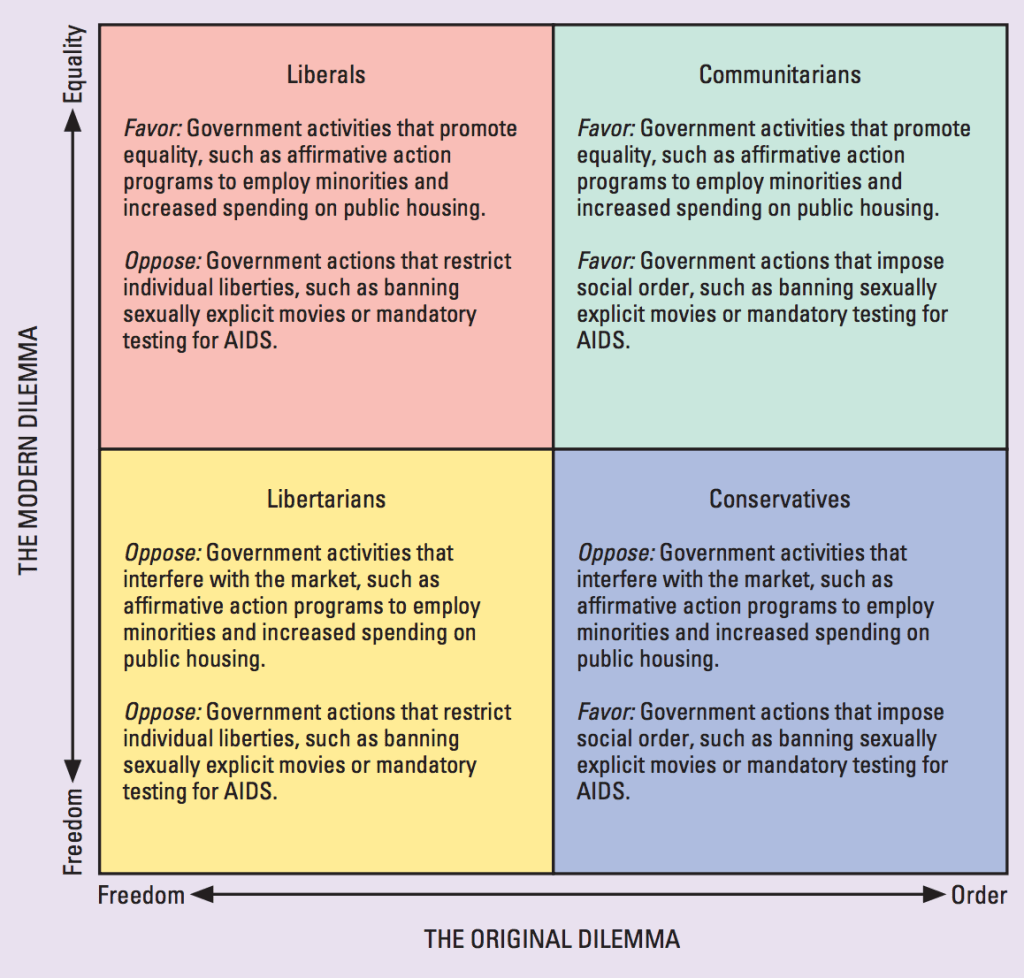
Contemporary political ideologies are based on the original dilemma and the modern dilemma. The original dilemma is the conflict between freedom and order, which are considered to be in conflict with one another: the more you have of one, the more you have to give up of the other. If you give the government more authority to establish a secure and orderly society, then the people must sacrifice some of their freedom. On the other hand, if you want to have more freedom, then the people must risk having a less orderly and secure society. This original dilemma is only half of what is needed to understand the current ideological spectrum.

Since promoting equality has recently become an objective of the government, the modern dilemma is the conflict between freedom and equality. Just like the old dilemma, the modern dilemma is a situation where more of one thing means less of the other. Essentially, if the government steps in to enforce some kind of equality among all citizens, then a degree of freedom must be given up by the people in order to make that a reality. For example, policies like social welfare and affirmative action are systems that implement equality, but must come at the expense of freedom from government control.

Affirmative action is a policy that has ardent support from some, as well as fiery opposition from others. The key phrase in the protest above is “fight for equality.” Some view the promotion and enforcement of equality as a valid and necessary objective of government, and affirmative action is an example of just that. However, this policy has not gone without backlash, as many view it with disgust due to its perceived infringement on individual freedom.

Let’s take it a step further by examining the different political ideologies. Every ideology is based on a unique combination of the original and modern dilemmas. Understanding the details and nuances of the different political philosophies is key to understanding why the pandemic has caused such political division. If you look at what the different political ideologies entail, you may be surprised with what they actually advocate, particularly when it comes to liberals and conservatives.

Below are the contemporary ideologies organized into a two-dimensional framework. Libertarianism and communitarianism are the two extremes, as the former is in favor of freedom for both dilemmas, while the latter supports both order and equality over freedom. Liberalism and conservatism are more moderate, as they both promote freedom, but only in one of the dilemmas. While liberals promote freedom over order but not over equality, conservatives promote freedom over equality but not over order.

Many Americans have a one-dimensional mindset when it comes to politics. However, in order to get a full understanding of the different political philosophies, you have to look at both the scope and purpose of the government. Looking at the political quadrant system above, we can get a multifaceted understanding of where the political ideologies come from and how they can be applied to different issues.

We tend to generalize the interests of liberals and conservatives based on the scope of government alone. The notion is that liberals support the government taking a more active role in society, while conservatives oppose “big government” and prefer that individuals be free from this kind of government overreach. But in reality, conservatives do not hesitate to use the government to promote order (but not equality), while liberals support freedom over order and are against “big government” forcibly maintaining the social order. An example of this is how liberals tend to be more tolerant to homosexual behavior. They are also in favor of more lenient laws that allow women the choice to get an abortion. They prefer the government to stay out of these kinds of situations. This means that there are certain instances when conservatives actually favor a larger scope of government, while liberals would be opposed. What defines these two ideologies is more complex than many people realize.

Let’s take a closer look at conservatives. If conservatives are all about “small government,” then why do they support the government stepping in to restrict abortion? Or to prevent same-sex marriage? Why do they support a strong police force (a sector of the government) to enforce the law and be tough on crime? Conservatives see all of these examples as justified uses of the government in order to ensure that the social order is maintained in all aspects. Did you notice how “mandatory testing for AIDS” is listed in the quadrant system above as something that conservatives favor? Well, this makes perfect sense, since conservatives support order over freedom. During the AIDS pandemic, required testing was seen as a protective measure against HIV, which would in turn maintain the safety of citizens and the social order as a whole. However, mandatory testing programs were faced with severe backlash from those who argued that they infringed on their individual rights. Based on the ideology spectrum, conservatives would support such testing programs, while liberals would be opposed.

How does this apply to the COVID-19 pandemic? We can make some significant parallels between the AIDS pandemic of the 1980s and the COVID pandemic today. Popular political labels in America tend to paint liberals as being in favor of policies like mask mandates, vaccine mandates, and stronger government regulation. These “liberal” policies are meant to keep people safe from the virus and in turn maintain societal safety. On the other hand, conservatives tend to be seen as vehemently opposed to such mandates, as they are perceived as flagrant violations of their individual liberties. But aren’t conservatives in favor of maintaining the social order, even if it comes at the expense of individual freedom? That right there is the essence of my argument: the COVID-19 pandemic has turned conservatives into libertarians.

The message on this protester’s sign is clear: freedom first. This phrase is the essence of libertarian ideology. Mask mandates and lockdowns are examples of order being placed over freedom. But many “conservatives” have been advocating that individual freedom should be prioritized over this kind of social order. The belief in “freedom first” is turning American conservatives into libertarians, at least from a purely ideological standpoint.

Conservatives and libertarians agree on one thing for certain: freedom over equality. They are both opposed to social welfare programs and policies that promote the redistribution of wealth, as these systems enforce social and economic equality at the expense of individual freedom. But libertarians are also opposed to government measures that maintain the social order, while conservatives are supposed to be in favor of those kinds of policies. If the “conservatives” of 2021 really live up to their name, they would actually support government mandates that would protect the social order, which includes the safety of the community during a public health crisis. Conservatives and Republicans have the right to oppose these government mandates; all I am saying is that they are promoting libertarian ideas, not conservative.

I would like to add another important point to my argument: today’s “liberals” are actually not so liberal according to the political quadrant system. At least in the context of the pandemic, they are promoting ideas that are more communitarian than anything else. Liberals continue to support equality over freedom, but the pandemic has also made them in favor of order over freedom. This has taken the form of support for mask mandates, vaccine mandates, stricter lockdowns, and greater government control in protecting the health and safety of society. This places “liberals” in the communitarian corner.

Let’s go back to conservatives and libertarians. Why does this even matter? Isn’t this just a semantic difference between conservatives and libertarians? Well, I argue that this is a significant detail that is being overlooked. The fact that conservatives and Republicans are looking at the pandemic with a libertarian mindset raises some serious questions. First, what do conservatives really care about? Do they really value freedom above anything else? Are they willing to fight for individual liberties, even when the safety of the community and the social order is threatened? Second, what do conservatives define as “social order”? Do they not consider a pandemic a danger to the social order? That seems to be the mindset of many contemporary conservatives, since they value individual freedom over the general health and safety of society. Perhaps they recognize that the pandemic poses somewhat of a threat, but not a threat that is worth sacrificing their freedom for.

Former President Donald Trump and the Republican Party have made their position clear: the pandemic should not be used as a justification to infringe on the individual freedom of the American people. Assuming that conservatives and Republicans maintain their support of freedom over equality (which they do), their approach to pandemic policy places them in the libertarian corner of the political quadrant system, since they are promoting freedom over order. Perhaps CPAC 2021 should be renamed LPAC (Libertarian Political Action Conference) to more accurately reflect their attitude toward the pandemic.

It is essential that we look at the bigger picture by examining the overarching consequences of the pandemic. Apart from the tragic loss of life, as well as the destruction of so many livelihoods, we can see how damaging the pandemic has been to the political climate of the country. In my first politics article, I talked about how America has been in a constant state of division since its founding. It is clear that this polarization has been exacerbated since Donald Trump got voted into office in 2016, and things only got worse during the pandemic. My theory states that in the context of pandemic policy, conservatives and Republicans have adopted a libertarian mindset, while liberals and Democrats have taken a communitarian approach. If my theory is correct, then the pandemic may be causing more political division than we realize.

As I said earlier, liberalism and conservatism are the more moderate ideologies on the political spectrum, while libertarianism and communitarianism are the extremes. If the pandemic really has caused Americans to abandon their moderate positions in favor of the more extreme ideologies, then the American people have become even more polarized than they were before. This is quite alarming.

Where do we go from here? Do we just wait for the pandemic to end and hope that everyone reverts to their moderate liberal and conservative positions? Ever since I got into politics, I have never seen America so divided. Perhaps it was inevitable, especially when Trump became president. The pandemic has driven this country into the ground, and drastic political division has been a detrimental side effect. But understanding where people stand ideologically is the least that we can do.

Staying Within Yourself: The Connection Between Personality and Game Style

As you probably know by now, my tennis articles focus on the mental side of the game. My whole life, I have been told things like “tennis is mental” or “tennis is more than hitting a ball with a racket.” While I sort of understood what this meant in theory, I did not grasp what the mental game was actually composed of, nor did I understand how it applied to me as a player. In my previous articles, I have talked about mental topics such as toughness, change, nerves, and performance under pressure. For this article, I will unfold a new aspect of the mental game that I believe to be an underrated and underappreciated part of tennis: personality.

I have been watching professional tennis for as long as I can remember, and my two favorite players have always been Roger Federer and Rafael Nadal. After years of watching these two icons at the top of the game, it became clear how different their personalities were from one other. Generally speaking, Federer is a relaxed, easygoing guy, while Nadal is more intense and meticulous with how he carries himself. Once I understood the details and nuances of their personalities, I related them to their respective game styles. The connection could not have been more clear.

The relaxed nature of Federer’s personality has translated into his effortless strokes and ability to initiate his own offense in the point. The punctilious personality of Nadal has shown up in his game in the form of intensity and fierce grit, while also being careful to consistently keep the ball in the court.

Game style has a direct correlation with the personality of the player. How you play is a physical manifestation of your intrinsic characteristics and dispositions. At the end of the day, these are human beings we are talking about. We get so used to watching these guys play that we take them for granted. We see them as tennis machines. But these guys are human beings just like the rest of us, and what they do in their occupation is a reflection of who they are as a person.

The Federer-Nadal rivalry is special due to the incredible level of tennis between these two competitors. But the distinct personalities of Roger and Rafa make the clash that much more thrilling.

I want to shift our focus to my realization of this mental concept in my own game. As I have said previously in my blog, I have a meticulous personality in how I carry myself and the routines that I follow. For simplification, I will refer to my scrupulous personality as following my “specific routine.” I have learned that in order to settle my nerves before a tennis match, I follow a certain set of procedures that I prepare for myself. I started playing tennis at the age of four, and when I first started competing, my number one concern was to not miss. I was not too concerned about hitting winners or trying to dictate every point. But I did try to keep the ball going as long as possible until my opponent would eventually miss a shot before I would. Just like I would never want to mess up my “specific routine,” I would never want to miss a shot. Naturally, my desire to make as many shots as possible and avoid missing at all costs translated into my counterpunching game style. Over time, I began to play more aggressively to make my game more effective at the highest level, but only to a certain extent. While aggression was certainly a part of my game, counterpunching was still the core of my identity on the court.

There was a time in my tennis career when I tried to make some pretty drastic changes to my game. I felt like something was missing: my counterpunching style was limiting me from taking my success to the next level. I decided that I needed to shift to a more aggressive style in which I would try to initiate and dictate points on my own, rather than play in a more reactive fashion. To put it bluntly, this attempt at radical change did more harm than good.

Something just felt off. As I have said before, my personality demands that I feel in control of myself and my game. The changes that I tried to make caused me to feel out of control. What I learned was this: trying to change your game style to something that is in conflict with your personality is a recipe for disaster, since you are doing something that is not naturally you. To perform well on the tennis court, you must stick with your natural game style that is in balance with your innate personality traits.

A few articles back, I mentioned the importance of being able to step outside of your comfort zone in order to make necessary changes to your game. I talked about how I was trying to incorporate aggressive baseline play into my game style. However, I have had some mental realizations since then, so I would like to modify my position on that issue: change and adaptation must take place within your game style. What you should not do is make such a dramatic change that you are altering your game entirely. For example, I have added more aggression into how I play. Using my forehand as a weapon has become a critical part of how I try to win points. However, despite the aggressive nature of my forehand, I am still a counter-puncher at heart. Yes, I do have aggressive elements in my game; but my style of play still revolves around trying to make as many shots as possible, even if that means reacting to what my opponent does. Keep in mind, when I say that I “react to my opponent,” in no way does this mean that I am playing careful, tentative tennis. That is just about the worst thing you can do on a tennis court. It just means that you still hit every ball with aggression, but you do so in response to what your opponent is doing, rather than trying to initiate the point yourself. This nuance is something that has taken several years for me to realize, and it has been a central part of my journey as an athlete.

At this point in my blog, you probably know that I always connect my tennis experiences to my life as a human being. This lesson has taught me a particularly valuable lesson that I believe is worth sharing: if you are trying to achieve something, you must do so by following a path that is true to you. Do not try to be someone you cannot be or do not want to be. The best way to achieve success is to do it your way, in a way that corresponds to your personality. Yes, you need to make changes along the way; but these changes must happen while staying within yourself.

What Was the True Cause of the American Civil War? Understanding the Origins and Dangers of the Lost Cause, and How They Affect Us Today

The Civil War: the greatest moral and political crisis that the United States has ever faced. The nation was torn apart, as America was divided into two separate countries: the Union in the North, and the Confederacy in the South. The only major controversy that separated the politics of these two countries was the right of the government to intervene on the issue of slavery. Unlike in the Union, the Constitution of the Confederacy explicitly stated that the government at any level had absolutely no authority to limit the institution of slavery in any way, shape, or form. It is critically important that we understand what truly caused this terrible war, and how people have tried to distort history in order to preserve their own reputation.

In the decades leading up to the Civil War, the question of slavery was the elephant in the room. There had been a number of laws, both at the federal and state level, that had both upheld and restricted the expansion of slavery. The conflict over slavery foreshadowed a disaster that was waiting to happen. That disaster came with the start of the American Civil War in 1861, which would rage on to become the deadliest conflict in United States history.

Claiming the lives of 750,000 Americans on both sides, the Civil War (1861-1865) was by far the deadliest conflict in U.S. history. However, the fierce debate over the issue of slavery had been raging for decades leading up to the outbreak of the war.

For this article, I want to avoid recounting all of the historical events that led up to the outbreak of the Civil War. The main point is this: slavery was the cause of the war. In my opinion, there should be no significant debate on this issue, as the evidence is abundantly clear. Every major event that led up to the war, including the Kansas-Nebraska Act, Bleeding Kansas, the Dred Scott Supreme Court ruling, and the election of Abraham Lincoln, was centered on one major issue: the status of slavery. The American South saw that their beloved institution of slavery was being threatened, even if the federal government was only trying to limit its expansion. President Lincoln specifically said that he only intended to stop slavery’s expansion into new territories in the West, and that he had not the power nor the inclination to destroy slavery where it already existed in the Southern states. But Lincoln was still an abolitionist in the eyes of the South, and they responded to his election by seceding from the Union and fighting for slavery’s preservation and perpetuation.

Even without reading into the historical details that prove slavery’s central role in causing the war, you can read these quotes from the Civil War era and reach the same conclusion:

“The South is invaded. It is time for all patriots to be united, to be under military organization, to be advancing to the conflict determined to live or die in defense of the God-given right to own the African.”

-Richard Thompson Archer, Mississippi planter, Dec. 8, 1859

“The question of Slavery is the rock upon which the Old Government split: it is the cause of secession.”

-G.T. Yelverton, of Coffee County, Alabama, speaking to the Alabama Secession Convention, Jan. 25, 1861

“The fundamental cause of the imperiled condition of the country is the institution of African servitude, or rather, the unnecessary hostility to that institution on the part of those who have no connection with it, no duties to perform about it, and no responsibilities to bear as to the right or wrong of it.

-Senator William Bigler of Pennsylvania, Jan. 21, 1861 

“The new Constitution [of the Confederacy] has put at rest forever all the agitating questions relating to our peculiar instiution—African slavery as it exists among us—the proper status of the negro in our form of civilization. This was the immediate cause of the late rupture [secession from the Union] and present revolution.”

-Alexander Stephens, Cornerstone Speech, Mar. 21, 1861

Alexander H. Stephens, Vice President of the Confederate States of America, was a vehement supporter of slavery and a strong believer in white supremacist ideology. In his infamous Cornerstone Speech, he declared that the new government of the Confederacy would be founded upon “the great truth that the negro is not equal to the white man; that slavery, subordination to the superior race, is his natural and normal condition.” Throughout his speech, he made it abundantly clear that the U.S. federal government’s attack on Southern slavery was the root cause of secession.

I can go on and on about the unlimited evidence proving that the South’s desire to protect their “peculiar institution” was the one true cause of the Civil War. But the vast majority of surveys show that the nation is still divided over this question. Some surveys show that only a slight majority believe that slavery was the root cause of the war, while other surveys show that a slight majority believe that “states’ rights,” among other reasons, caused the outbreak of the war. These surveys raise a serious question: why have so many Americans been led to believe that slavery was not the fundamental cause of the Civil War?

The answer to this question is a negationist, pseudohistorical myth known as the Lost Cause, whose main purpose was to perpetuate the notion that the South was justified in seceding from the Union and forming the Confederacy. The myth claims that the Confederate army fought not for the protection of slavery, but for a heroic cause against the tyranny of the U.S. federal government.

How did the South manage to brainwash such a large portion of their population into believing the Lost Cause myth to be true?

The term was coined by Edward Pollard, a Confederate sympathizer, in 1866 when he published The Lost Cause: A New Southern History of the War of the Confederates. He argued that the U.S. Constitution gave states the right to govern themselves independently and free of intervention from the federal government. Therefore, he contended, the essence of the Southern rebellion was not the defense of slavery itself; rather, they were defending each state’s right to choose for themselves whether or not to allow slavery. This logic was exploited by pro-Confederate Southerners, who twisted their former support of slavery and white supremacy into a patriotic defense of the Constitution and “states’ rights.” Supporters of the Confederacy, desperate to justify the devastating war that they had created, were quick to spread the narrative of the Lost Cause. Unfortunately, they have been quite successful in doing so. One organization that has contributed to the success of the Lost Cause is the United Daughters of the Confederacy (UDC).

The UDC was founded in 1894 in Nashville, Tennessee. Composed of middle- to upper-class white Southern women, the main purpose of the UDC was to pass down the ideas of the Lost Cause to future generations in the South. The UDC took pride in perpetuating a false legacy that the Confederates heroically sacrificed for a good cause. They raised thousands of dollars to build monuments commemorating Confederate soldiers on courthouse lawns. They hung up portraits of Confederate leaders and generals in public schools. They made sure that the horrors of slavery were removed from school textbooks, teaching that slavery was actually a benevolent institution that benefitted both white people and black people. More importantly, they monitored these textbooks to make sure that slavery was in no way portrayed as a cause of the war.

The United Daughters of the Confederacy falsified history by upholding and promulgating the narrative of the Lost Cause. By funding Confederate monuments and controlling the content of school textbooks, the UDC ensured that the dangerous lie of the Lost Cause permeated Southern society.

In her pamphlet A Measuring Rod to Test Textbooks, and Reference Books in Schools, Colleges and Libraries, Southern historian Mildred Lewis Rutherford devised a set of parameters that authors should follow when writing educational books, particularly for children. The pamphlet was shared with school boards throughout the South, and UDC-backed committees kept an eye on textbooks to make sure that they were teaching a narrative that they approved of. Take a look at some of the guidelines in the pamphlet:

“Reject a textbook that does not give the principles for which the South fought in 1861, and does not clearly outline the interferences with the rights guaranteed to the South by the Constitution, and which caused secession.

Reject a book that calls the Confederate soldier a traitor or a rebel, and the war a rebellion.

Reject a book that says the South fought to hold her slaves.

Reject a book that speaks of the slaveholder of the South as cruel and unjust to his slaves.

Reject a textbook that omits to tell of the South’s heroes and their deeds when the North’s heroes and their deeds are made prominent.”

These criteria for Southern textbooks are clear evidence of the South’s attempt to whitewash history and indoctrinate future generations into believing the myth of the Lost Cause.

The actions of the UDC succeeded in doing two main things: painting the Confederacy in a positive light, and minimizing the evil of slavery and its role in causing the Civil War.

Now that we understand how the UDC managed to brainwash the South into believing the Lost Cause, let’s look at the bigger picture and ask ourselves an important and necessary question: Why? Why would the Southern states, who had so proudly fought to preserve slavery, suddenly begin denying that the war was ever about their “peculiar institution”?

Prior to 1865 (the end of the Civil War), the consensus of the South was that slavery was a good-natured institution that ought to be upheld as the cornerstone of the Southern way of life. However, in the aftermath of the Confederates’ defeat, the abolition of slavery via the 13th Amendment to the Constitution forced the Southern states to acknowledge a harsh reality: their beloved institution of slavery had been discredited not only in America, but in the eyes of the world. It came as a shock to the South that if slavery was no longer recognized as a legitimate institution (both domestically and internationally), then the legacy of the Confederacy itself would have a bad reputation in the eyes of history. In order to protect their image and be on the “right side of history,” it became a psychological necessity for Southerners to distort their past on why they seceded and fought a rebellious war against their own country.

The passage of the 13th Amendment and the subsequent emancipation of black people was arguably the most consequential turning point in the history of race relations in the U.S. While this is seen today as a mark of progress and social justice, the fallen Confederacy in 1865 saw it as a catastrophic piece of legislation, as it sparked a period of panic and disarray in the South. The rejection of the institution of chattel slavery on the national and global stages was an integral part of the Civil War era, as it led the South to rewriting their own history about why they seceded and fought against the Union.

The notion of “states’ rights” became the predominant justification in the South for the war that they had created. However, when a Confederate sympathizer uses this as an argument to defend the legacy of the Confederacy, I ask them: states’ right to do what? If you make the case that the federal government was overstepping its bounds by abridging the rights of states to govern themselves, then you have to identify what these rights were. What was the right that the South fought to maintain? None other than the protection, preservation, and perpetuation of the morally repugnant institution of chattel slavery.

When we study history, we must avoid looking at events in a vacuum. We must examine how certain historical events impacted future developments. This directly applies to the Lost Cause, as the propagation of this pseudohistorical myth had major ramifications on race relations in the United States.

The Lost Cause is a disturbing example of people being confused and misguided about their history. If people do not understand the bad things that happened in the past, we are more likely to repeat it, or at least something similar to it. The Lost Cause has made people overlook the role of racism and oppression of African-Americans in the Civil War era. Many people prefer to look at the positive aspects of America, without owning up to the racist parts of its history, including how proudly the South fought to maintain institutions that subjugated black people in the name of white supremacy. Frederick Douglass, a formerly enslaved man and prominent abolitionist, feared that the erasure of slavery from the legacy of the Confederacy and the Civil War would contribute to the failure of the federal government to protect and uphold the rights of the newly freed black population. Douglass could not have been more correct in his fear.

The violence unleashed on the black community after the Civil War, as well as the oppression of the black population during the Jim Crow era, have proven Douglass’ fears to be valid. I argue that the Lost Cause played a major role in the subjugation of black Americans in the post-slavery era. At the very least, the Lost Cause contributed to the complicity of both the government and the people to the abuse and maltreatment of African-Americans in the South.

This political cartoon encapsulates the reign of terror that black people in the South experienced in the years after the Civil War and the abolition of slavery, a period known as the Reconstruction era. The black community fell victim to white supremacist terrorist groups, such as the Ku Klux Klan and the White League. These organizations were disgusted with the sight of black people who were now free from bondage.

In the context of today’s America, the Lost Cause has fueled a ridiculous debate over whether the Confederate flag symbolizes hatred and racism, or honest pride in Southern heritage. While the answer is clearly the former, organizations like the United Daughters of the Confederacy want you to believe the latter to be true. While many people have fallen for the lies perpetuated by the UDC and other pro-Confederate groups, we can still take an active role in recognizing the moral failures in our past and seeing how we can try to make them right.

While Confederate monuments were mostly erected during the late 19th and early 20th centuries, it was the Confederate battle flag that played a prominent role in the Southern resistance to the civil rights movement of the 1950’s and 1960’s. As shown in the image above, this flag was commonly used as a symbol of opposition to social and political equality for black Americans.

Many people argue that labeling America’s past as racist is fundamentally anti-American. But to me, critiquing America’s history because you want to make the country better is the most patriotic thing you can do. In fact, I find this to be far more pro-American than believing in a pseudohistorical myth that ignores the wrongdoings of a country to protect its reputation.

The Bridge: A Metaphor for Performance on the Biggest Stage

“I could’ve sworn that he looked just fine when he was practicing! I don’t know what went wrong during the match!”

These are common words of an angry parent or a perplexed coach after their tennis player has just performed poorly in a match. This can be applied to just about any sport there is, as long as there is a need to perform well to achieve a victory. I can tell you for certain that this has happened to me in the past, and I am sure that it has happened to just about every other tennis player. Based on my experience, I can guarantee that it is one of the worst feelings as an athlete. Having a good training session only to completely underperform on the match court is something that really leaves a bad taste in your mouth.

But how does this make sense from a logical standpoint? How can a high-performance tennis player have solid practice sessions and then follow it up with a poor match performance? I have been thinking about this question for a long time, and I believe that I have come up with an answer to help me understand this issue in greater complexity. That is the purpose of this article, and I have encapsulated this idea in the form of a metaphor: a bridge.

What exactly is this bridge that I am referring to?

The bridge is a metaphor that represents the connection between how well a player performs in training, practice matches, and tournaments. There are actually two bridges: one bridge between training and practice matches, and another bridge between practice matches and tournament matches. The strength of these bridges directly corresponds to the confidence that a tennis player has. If the bridges are strong and intact, then the player has an abundance of confidence and is able to regularly translate his game from the practice court to the biggest stage, where it matters most on the match court in tournaments. However, when these bridges are weak and wobbly, the player feels nervous when it comes to the tournament. Maybe from an outside perspective, he looked fine on the practice court; but inside the mind of the player, he feels a little unsettled about something potentially going wrong on the match court.

What are some examples of how this can happen? Let’s analyze one specific instance where the bridge can be weakened.

There are two types of settings on the tennis court: a closed setting and an open setting. A closed setting refers to practice sessions in which drills are carried out in a controlled and structured manner, as they only focus on a certain skill rather than allowing a fully normal point to be played out. For example, maybe the drill only includes crosscourt forehands without serves, or only focuses on crosscourt and down-the-line backhands. These types of practice drills are focused on a specific part of the player’s game, and they certainly do not resemble an actual point being played in a match.

On the other hand, an open setting is what we are accustomed to seeing in a match. There are no “restrictions,” since it is a completely normal point being played out in which there is no specific drill or skill that is being focused on. It is just an open point between two players.

Now, what is the purpose of me explaining the difference between these two different kinds of “settings”? Well, the transition between the two is exactly what the bridge is all about: being able to transfer your performance from a closed setting on the practice court to an open setting on the match court can be challenging for a player who is not mentally prepared. On top of that, throw in the pressure that comes with the bigger stage of a tournament, and you can find yourself in a heap of trouble if you are not fully confident and ready to perform in battle.

From an outside standpoint, one might think that tennis is a physical battle between two competitors who are hitting the ball against each other. However, what I have learned over the years as an athlete is that the mental game is not only a factor in tennis, but it is the driving force behind a competitive match. What a spectator sees from outside the court is a physical manifestation of the mental conflict not only between the two players, but within the mind of a single player.

I know that this all sounds a bit abstract at the moment, but I promise that it will begin to make sense as I continue to write. This idea took me years to understand, and writing it all out on paper is the easy part. Sports analysts talk all the time about how competition is “all about the mental game.” But what does that mean? This is a topic of discussion that I am still trying to comprehend. But the bridge metaphor is a step towards grasping the importance of the mental game, as well as the influence that it has on ultimate performance of the player in matches.

Tennis is not a straightforward game. It is far more than a collection of different shots like forehands and backhands. As you can see with my tennis articles, I closely examine the mental and psychological aspect of the game that can be linked to player performance, based on the experiences that I have had over the years on the tennis court. My goal is to continue making the bridge stronger and more durable. This is key to being a more confident and assertive player, particularly when it comes to translating my performance from the practice court to the match court.