“The alternate domination of one faction over another, sharpened by the spirit of revenge natural to party dissension … is itself a frightful despotism.”
-George Washington, Farewell Address, 1796
The Founding Era saw a nascent United States trying to find its path as a new nation. Even though the newborn country had a lot to celebrate for its successful war of independence against the British, there were a plethora of issues that needed to be worked out if the nation were to survive. One of the most important questions that loomed over the young nation was the future of political factions and parties, and the extent to which they would harm the country. (Spoiler: they harmed the country, a lot.)
Let’s be honest: even though George Washington meant well with his message on political parties, it was a bit unrealistic to expect that the nation would not eventually divide itself into rival factions. Virtually every country in the world has a political system that is defined by its division into parties with competing interests and agendas. However, unlike some other countries in the world (but similar to others), the politics of the United States is dominated by a two-party system.
The United States has been through a rollercoaster of different political parties at the national level. I could write a detailed article on the history of American political parties since its founding. However, that is not my goal. The purpose of this article is to explain the history of our modern two-party system and how it shapes American politics today.
The Republican Party was founded on March 20, 1854. It was created by a faction of former Whigs who held moderate anti-slavery positions. Ever since, the American political system, particularly at the national level, has been defined by its rivalry between two main political parties: the Democrats and the Republicans.
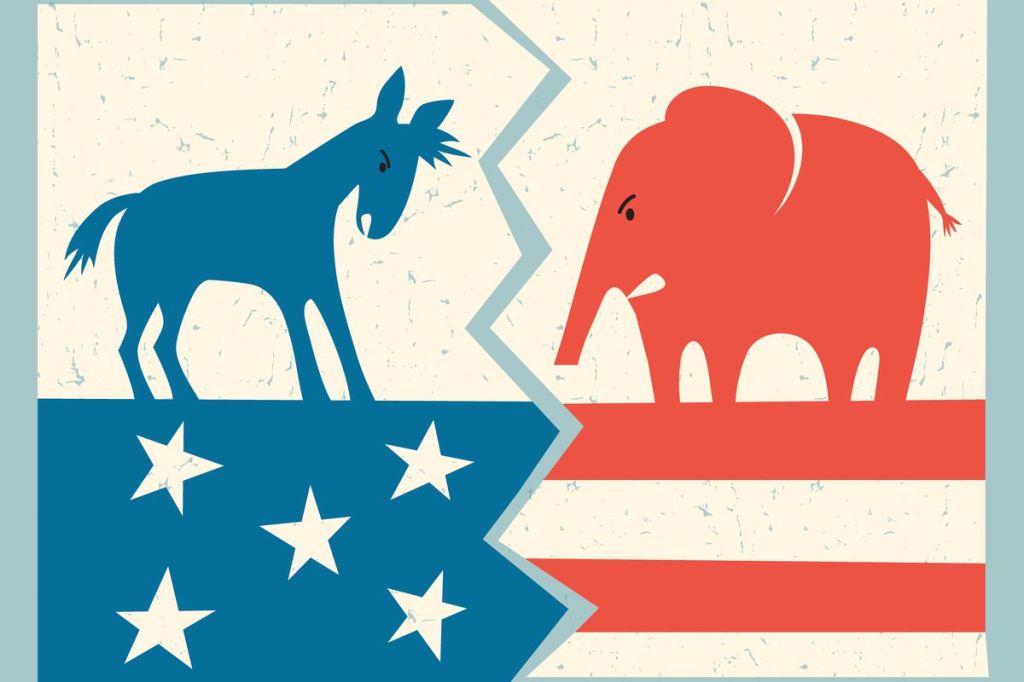
Amidst the political chaos and division that we find ourselves in today, we must understand the structure of our political system and how it affects elections and policymaking. Before we get into the pros and cons of the two-party system in America, we must first define the most basic of our terms: what is a political party?
In Federalist No. 10, James Madison argued that “liberty is to faction what air is to fire.” In a free republic like the United States, factions are inevitable. These factions take the form of several groups of people in a society that have their own ideologies, impulses, desires, and goals. As long as people are able to think freely, political factions will arise. A political party, on the other hand, is a more formal organization that seeks to capture power through elections, with the ultimate goal of getting policy agendas passed through the government. Throughout U.S. history, different political parties have wrestled for control of the government. This trend continues today with the political deadlock between Democrats and Republicans.
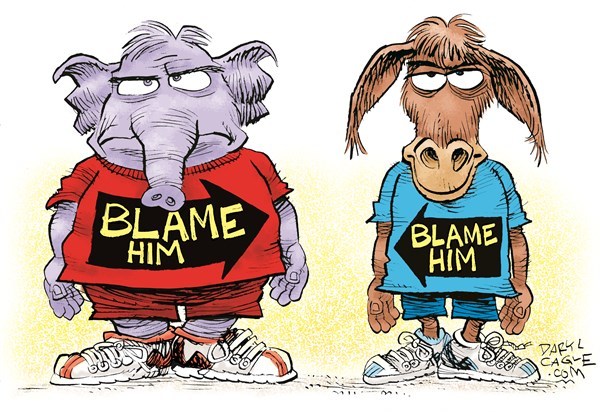
The “winner take all” system in the Electoral College plays a major role in upholding the two-party system. Since it is nearly impossible for a third party candidate to win the state-wide popular vote, either a Democratic or Republican candidate will always win the state. Not only does this discourage third party candidates from running, but it also incentivizes voters to elect either Democrats or Republicans, as they know that these are the only two candidates who have any real shot at winning.
The situation we find ourselves in today raises a pressing question: is the two-party system conducive to a healthy democracy?
If you have read my previous politics articles, you will see that I value looking at all issues from different perspectives. I find this to be a critical part of approaching political questions in a nuanced and objective way. The topic of this article is no different. Let’s examine the pros and cons of the two-party system in U.S. politics, starting with some of the most common arguments in favor of the two-party system.
Political information is much easier to understand in the context of two rivaling parties. Politics would become unnecessarily complicated if we were to have several parties that each held slightly different interests. Essentially, the two-party system simplifies politics and brings the country’s chaotic atmosphere into a clean-cut system of two main parties representing two general factions that represent varying interests. Each party can effectively and conveniently present their broad political philosophy, making the political process easier and more digestible for voters.
In a two-party system, parties must accommodate the needs of a wide variety of voters, which is what we see today with Democrats and Republicans. For example, the Republican Party appeals to many different kinds of conservative voters, such as Evangelical Christians, pro-life activists, gun rights advocates, and those who are generally in favor of lower taxes, business interests, individual freedom, and smaller government. In a multi-party system, each party would only need to meet the demands of a small fraction of society. Meanwhile, in a two-party system, each party needs to appeal to a wide range of voters, forcing each party to be more complete by encompassing many different interests.
Having two dominant parties prevents extremism from gaining ground in the government. The government is generally stable when being run by two parties, as fringe candidates are unable to gain any meaningful control in Congress. Each of the two parties must hover around the center of the political spectrum, where the Democrats are moderately left-wing and the Republicans are moderately right-wing. The far left and the far right can be dangerous for the stability of democracy, which is why the two-party system acts as a shield against this threat.

Even in times of intense political division and polarization, power in the government cannot dramatically sway between extremist parties on opposite sides of the political spectrum. Overall, the political situation can be kept under control, fostering greater stability than can be kept in a multi-party system.
Lastly, the two-party system allows for compromise to be reached in a much easier fashion. Let’s say that Congress and the president are trying to get a bill passed, but they are struggling to reach the threshold of a majority. All that the Congresspeople have to do is compromise with a few members of the opposing party, and perhaps with some members within their own party. In a multi-party system, reaching a majority in Congress would oftentimes be extremely difficult, possibly requiring complex compromises filled with awkward coalition-building. Finding middle ground in Congress is much more efficient in a two-party system, meaning that it is easier to get legislation passed in this manner than with multiple parties.
While these are certainly decent arguments, it is clear that the two-party system in American politics has its drawbacks. These flaws become obvious if you look at some of the impacts they have on our political system as a whole.
The most obvious failure of the two-party system is that it gives limited options for voters, who are ultimately forced to pick between a Democratic and a Republican candidate, even if they would rather choose someone from a different party. Voters know that there is no point in voting for a third party candidate because they have no chance of winning. This is especially the case in the presidential election with the system of the Electoral College.
In a politically diverse country like the United States, the two-party system does not do voters justice. There is no way that you could accurately reflect the diverse opinions, ideologies, and agendas of American voters with just two political parties. A multi-party system would much more effectively take into account the many nuances in political opinion across the country. Let’s look at the left wing as an example. It is characterized by a wide variety of political affiliations, including anarcho-communists, radical socialists, progressives, moderate liberals, and centrists. For instance, socialists and progressives often do not see eye to eye with centrists. Why should they all feel the need to subscribe to the Democratic Party?
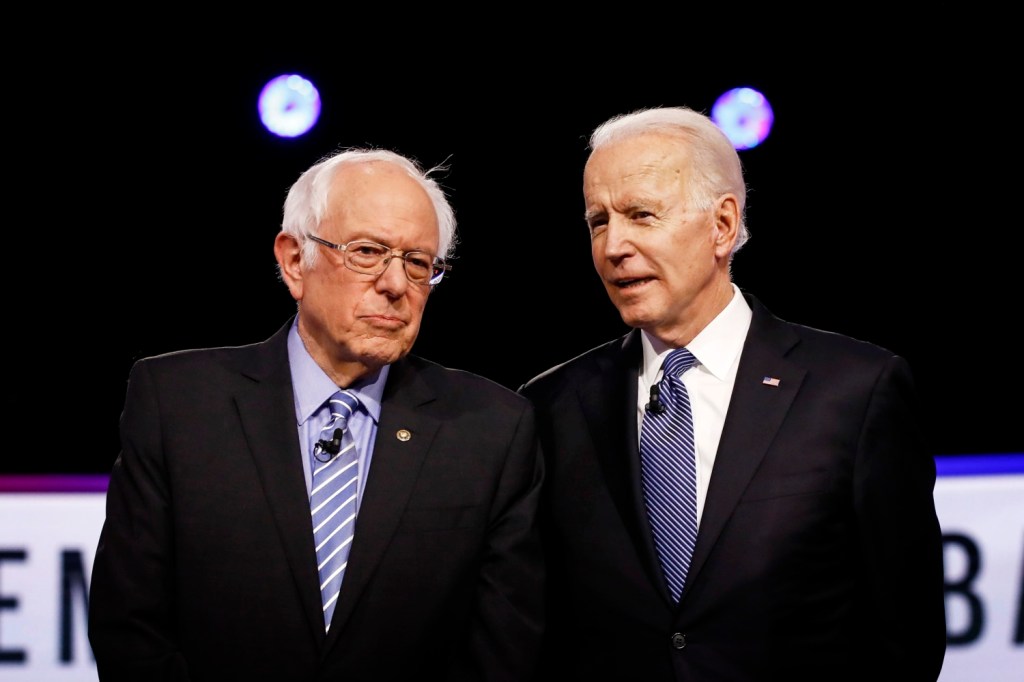
Not only does the two-party system cause problems for voters, but it also forces candidates to conform to a single party when they would rather associate with a party that is less moderate. For example, in a multi-party system, the progressive members of the Democratic Party would likely form their own Progressive Party, which would more accurately reflect the differences that they have with the moderate wing of the Democrats. But with the two-party system having a stranglehold on the government, progressives and moderate liberals are forced to be part of the same Democratic Party.
One of the most detrimental effects of the two-party system is that alternative voices are often ignored: “radical” ideas are suppressed in order to maintain the moderate status quo. Typically with the two-party system, only moderate and centrist ideas are tolerated at the government level, while “fringe” ideas are struck down as “dangerous.” This prevents critical progress from being made on the national level. But again, this could be seen as both a positive or a negative, depending on your perspective. Some people view slow and deliberate change as a way to maintain political stability while making progress in a controlled and gradual manner. However, others who are more progressive-minded see the “political stability” argument as a weak excuse to prevent meaningful change from happening. In short, a two-party system breeds political stability but restricts progress. A multi-party system allows for more progress but risks political stability.
The question of the two-party system in America is not so much a partisan issue as it is an ideological one (“partisanship” in the American context assumes the Democratic-Republican divide that has resulted from the two-party system). That may sound a bit vague, so let me explain further.
Those who are on the far right and the far left tend to be against the two-party system. For simplicity, let’s call these people “radicals.” As mentioned before, the two-party system is structured in a way that protects politics from reaching the fringes of the political spectrum, meaning that both parties tend to pursue relatively moderate agendas. That is why both the radical left and the radical right tend to be skeptical of both Democrats and Republicans because they are too moderate for their liking. The Democrats are not far-left enough for Antifa, and the Republicans are not far-right enough for the alt-right. On the other hand, moderates tend to support the two-party system for its ability to keep politics close to the center of the political spectrum, not swaying too far right or too far left. A change in the party system may be too radical of a change for many moderates to accept.
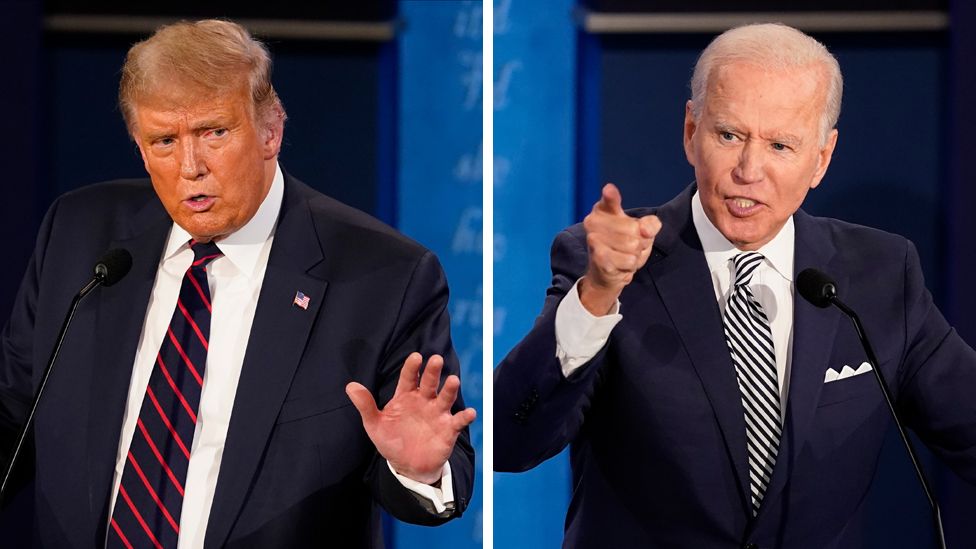
The 2020 presidential election reawakened many Americans’ frustrations with the current structure of party politics. A huge number of liberals felt like they only voted for Joe Biden because they were forced to pick “the lesser of two evils.” In fact, many liberals (particularly progressives and leftists) strongly dislike Biden; but they felt like he was tolerable compared to former president Donald Trump, especially since they were so eager to get Trump out of the White House. Perhaps a reformed Electoral College and a multi-party system would allow voters the chance to pick candidates who they truly support rather than picking the “less bad” candidate.
Since I am a moderate, one might think that I support the continuation of the two-party system, given my previous argument about moderates. However, I believe that there are too many drawbacks to the two-party system for me to tolerate. If you have read my previous politics articles, you would know that I love finding middle ground on the most contentious political issues. This situation is no different. Perhaps we can reach a compromise that allows for a more diverse set of political parties, but in a way that protects against the dangers of a multi-party system.
I propose that we allow a multi-party system but prevent an excessive number of parties from joining the government. Perhaps four parties (and no more) in Congress would be ideal, including a party for moderate Republicans, a party for far-right conservatives, a party for moderate Democrats, and a party for progressive liberals and leftists. In addition, a reformed Electoral College (read my article on the Electoral College here) could open the presidential election to candidates of a few other parties: this would allow those running to have a reasonable chance to compete against their more established Democratic and Republican opponents.
 All Things Tennis and Politics
Another excellent and well thought article!
LikeLike